 All case studies
Case study · AI · Venture capital
Velvet.vc
AI driven investment intelligence
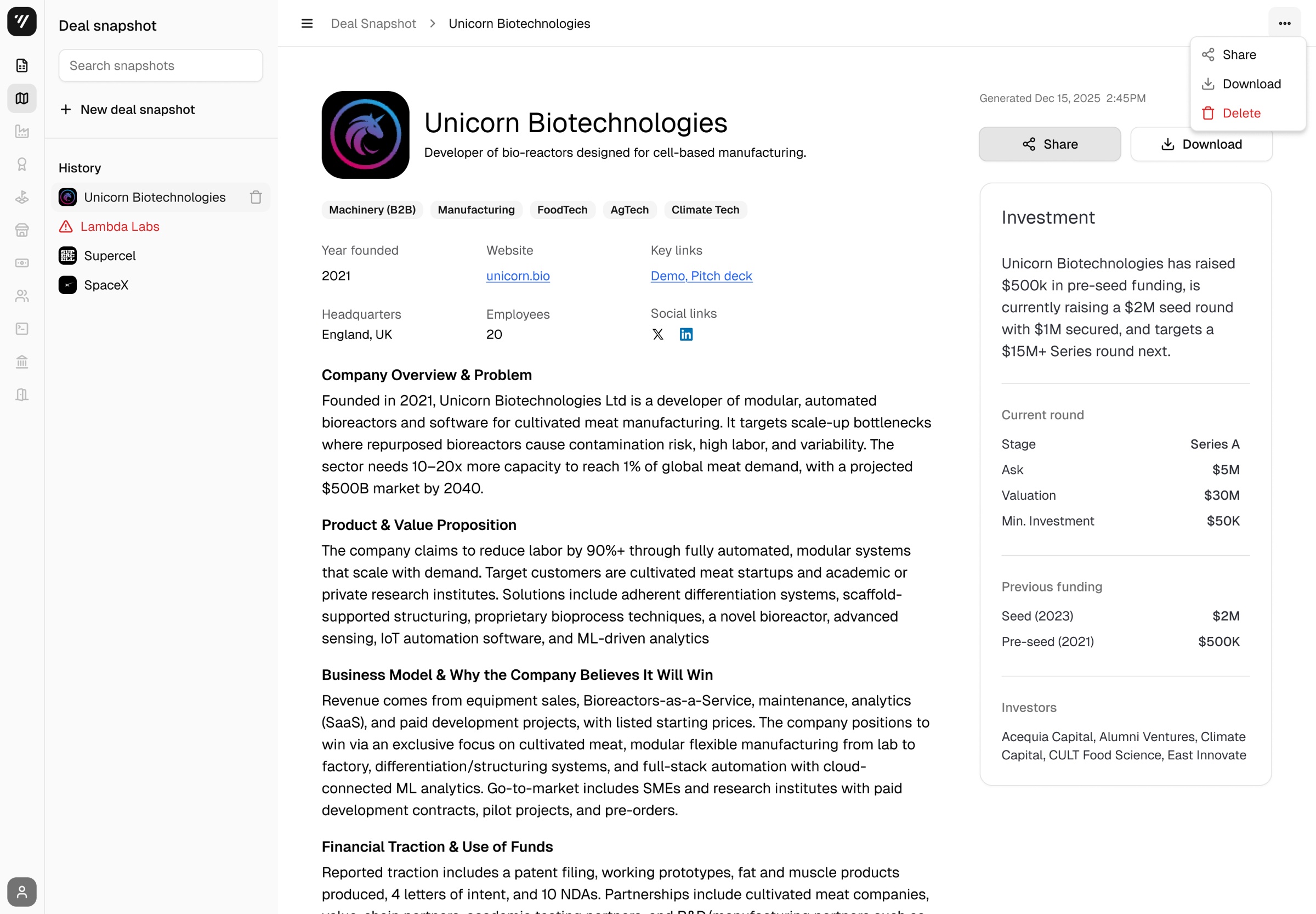
I was brought in as Head of Design to lead product design for Velvet: an à-la-carte suite of AI-powered tools that collapsed weeks of deal research into minutes.
- Company
- Velvet.vc
- My role
- Head of Design
- Timeline
- 2026 · a 3-month runway
- Worked with
- Leadership and a young engineering team building with Claude Code
01Context
AI tools for venture investors, with no platform lock-in
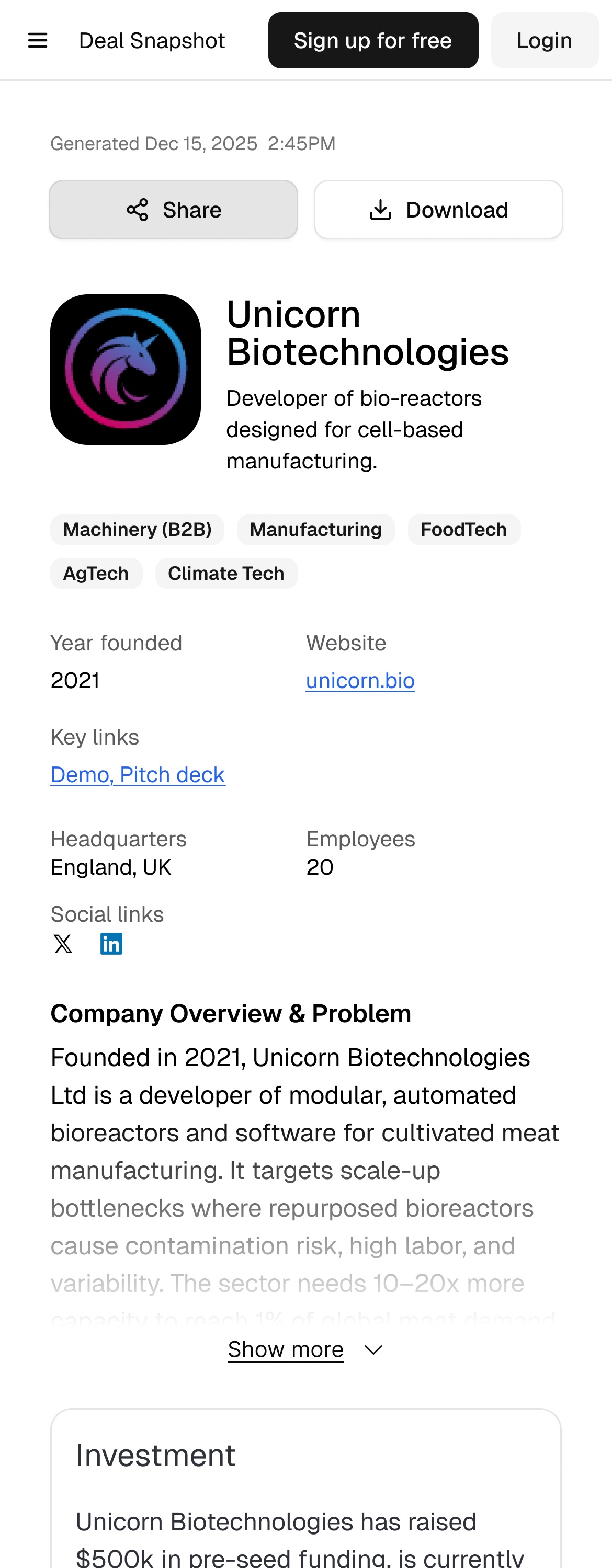
Velvet built an à-la-carte suite of AI-powered tools for venture investors. No platform lock-in. Just the intelligence you need, when you need it.
I joined as Head of Design with a three-month runway, a young engineering team already moving fast, and a roadmap that grew within my first month. My job was to give the suite one direction: what each tool was for, how they fit together, and how they felt to use.
02The problem
VC investors spend weeks getting to a decision.
Analysts build decks. Partners read decks. Opportunities are missed.
Most VC tooling tries to be everything, so investors have to commit to a whole platform before they get any value from it.
What the business needed:
- Tools investors could pick up one at a time, each useful on its own.
- One consistent experience across tools built quickly by different engineers, many of them with AI.
- Proof inside the runway: real tools in investors’ hands within months, not a roadmap.
03The strategy
The suite bet: discrete tools that condense analysis and decision timelines
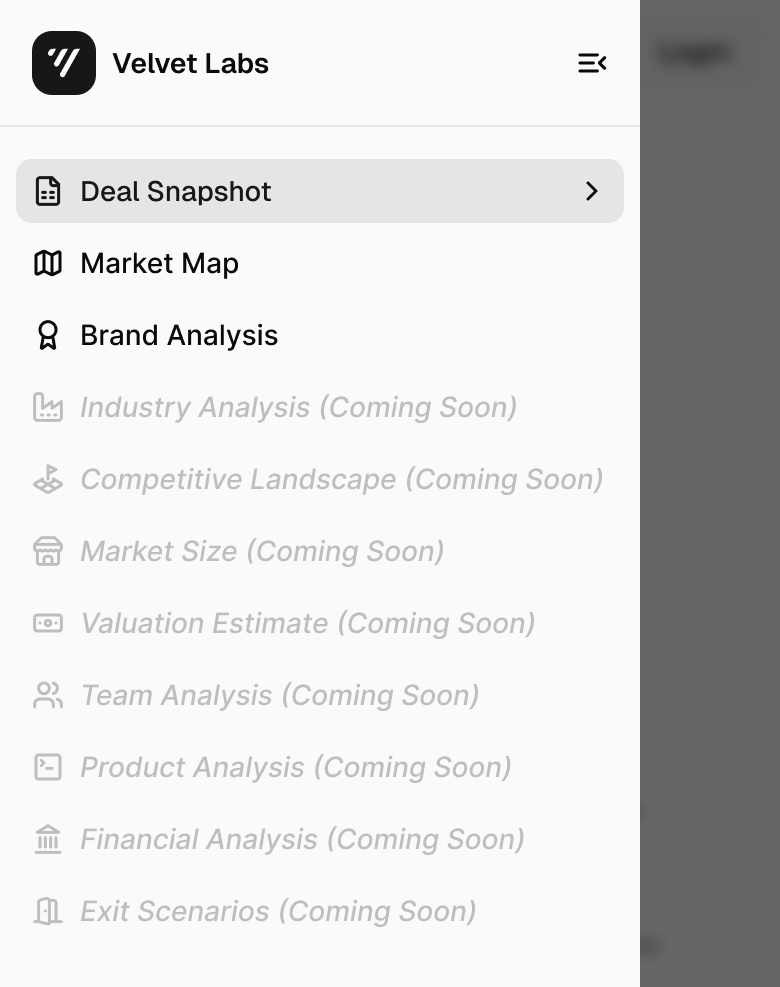
Velvet’s bet was the opposite of everything-tools: discrete, jobs-to-be-done tools investors could pick up and put down without committing to a platform.
I partnered with leadership to shape the product vision, name the features, set priorities and define what each tool needed to do. This was product-level decision making, applied through the design function.
 Deal Snapshot
 Market Map
 Brand Analysis
 Industry Analysis
 Competitive Landscape
 Market Size
 Valuation Estimate
 Team Analysis
 Product Analysis
 Financial Analysis
 Exit Scenarios
04The work
Leading design at the speed of an AI-native team
Velocity without fragmentation
The engineering team was young, fast, and building with Claude Code. Great instincts, but design was at risk of fragmenting under that velocity.
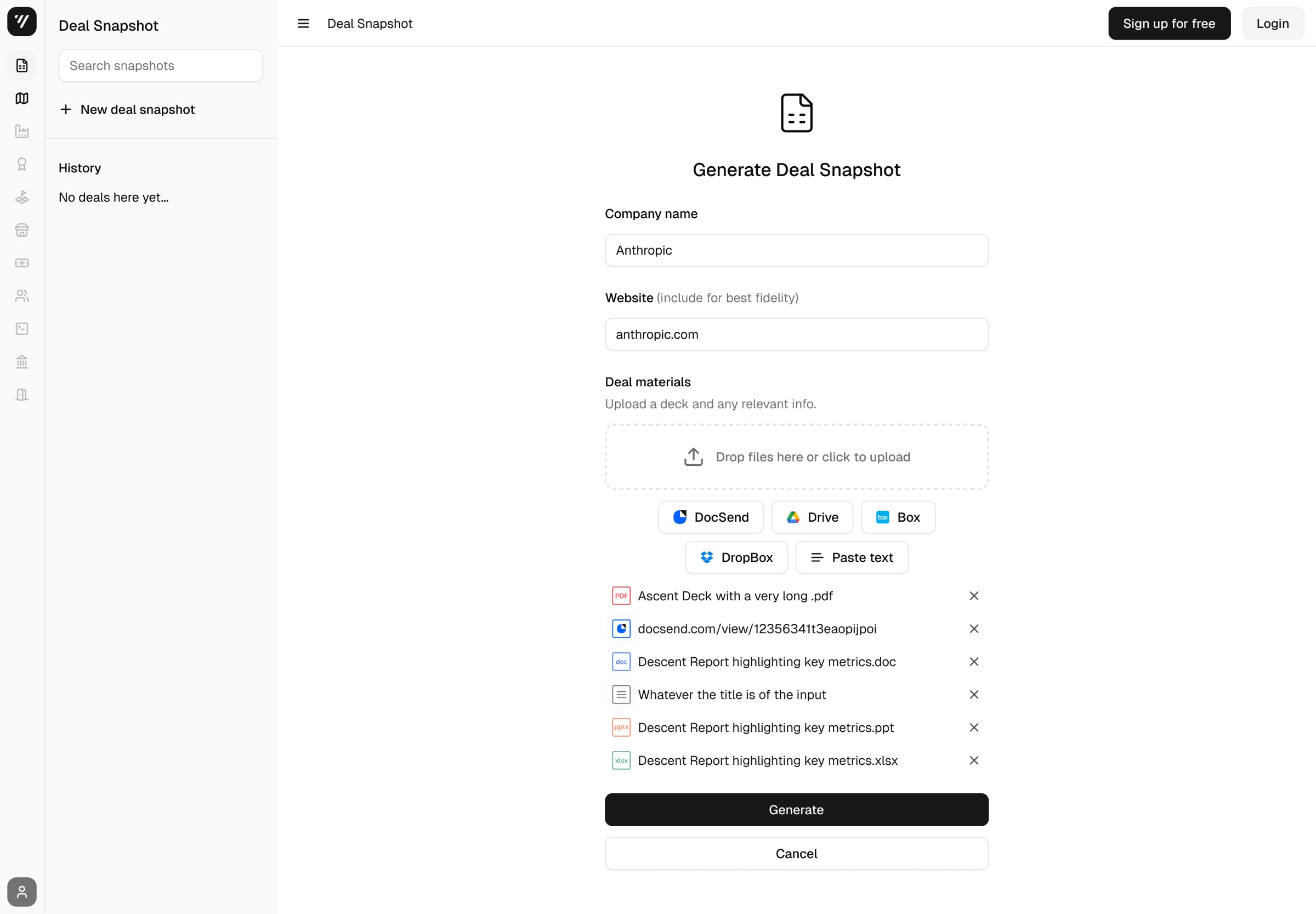
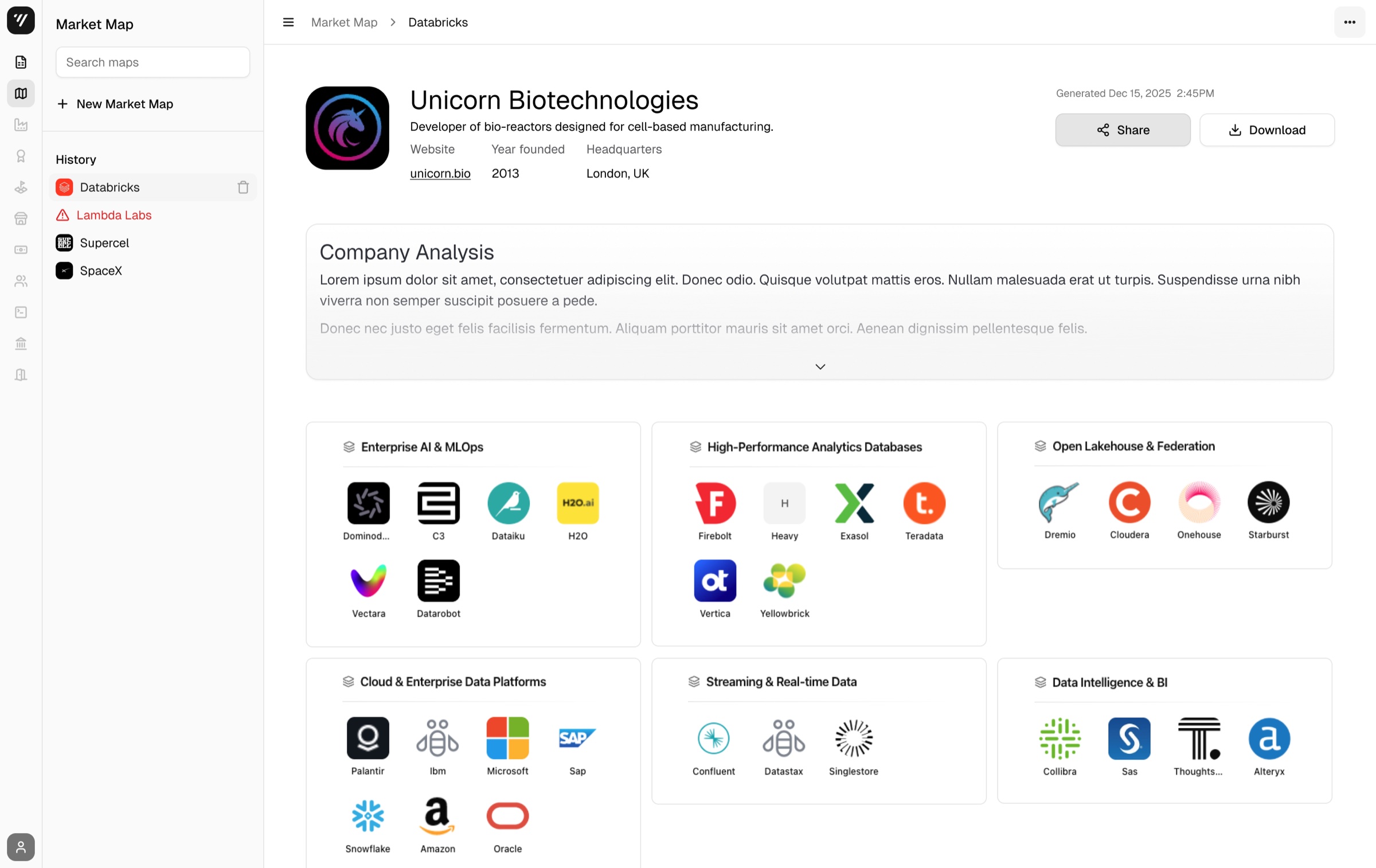
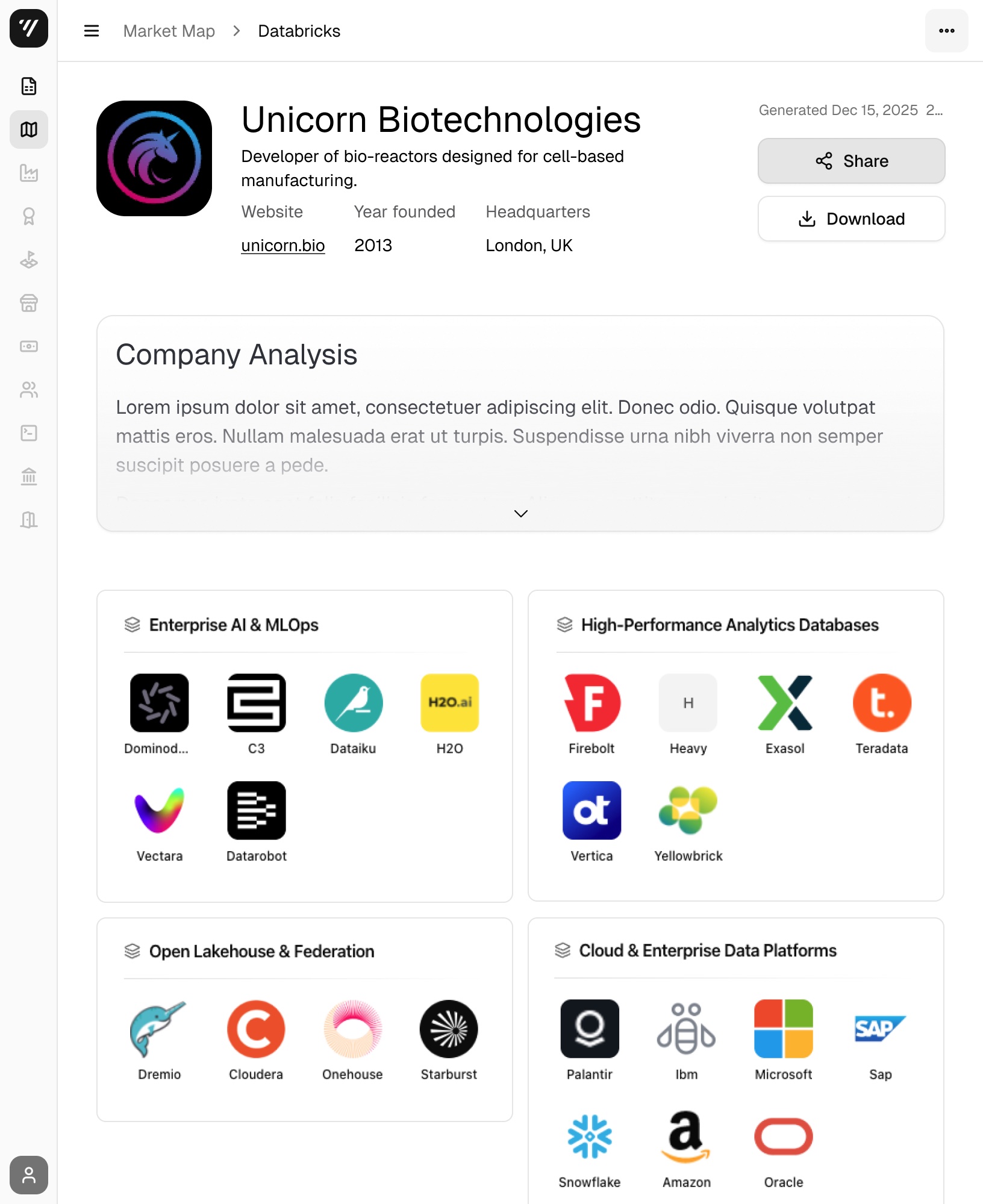
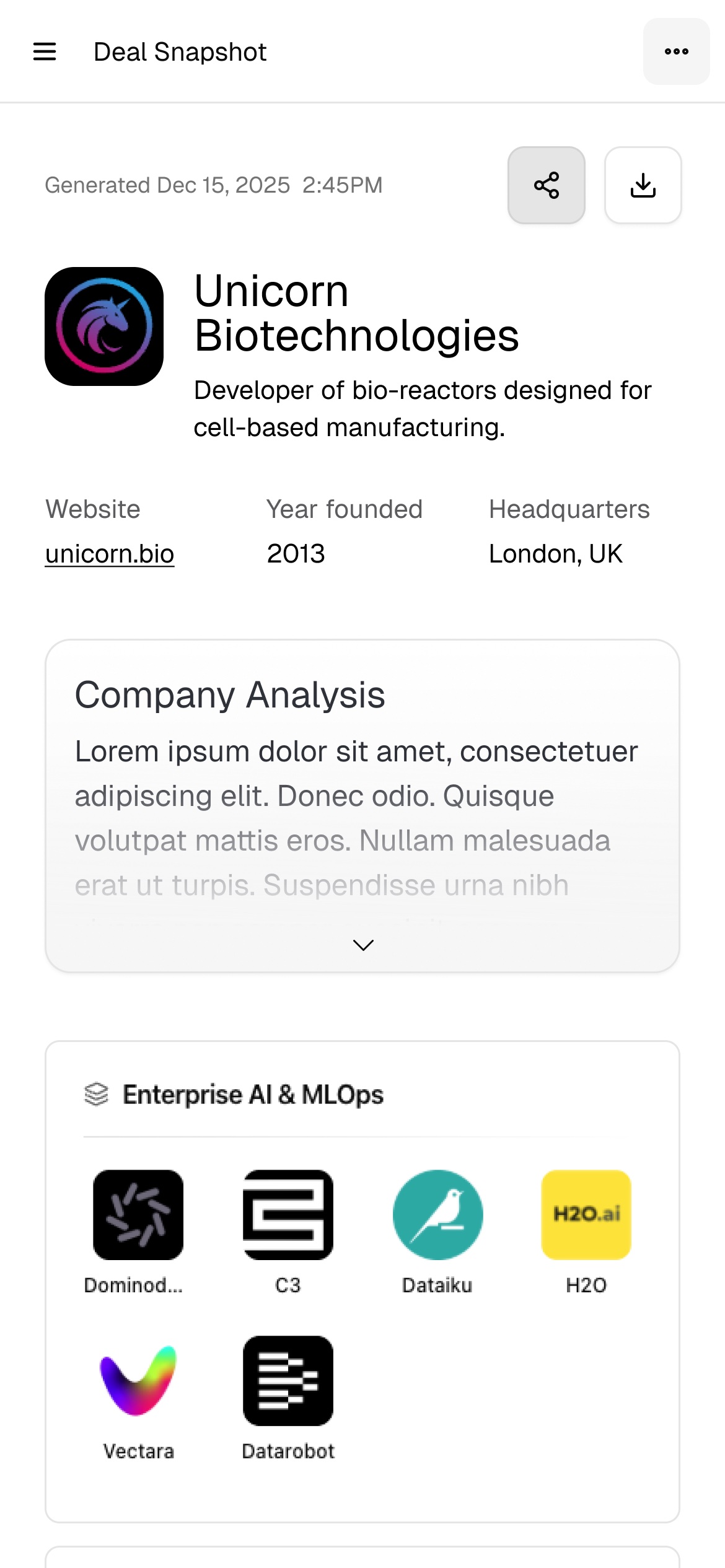
I worked directly with frontend engineers on each feature set, shaping decisions in real time rather than through handoffs. I established shared UX standards so inputs felt consistent across all tools, even as outputs varied dramatically. When AI-generated UI drifted from the overall strategy, I pulled it back.
My callReplaced handoffs with presence. Sitting with each engineer as they built kept one product from turning into eleven.
Rapid adaptation: the Deal Data Room
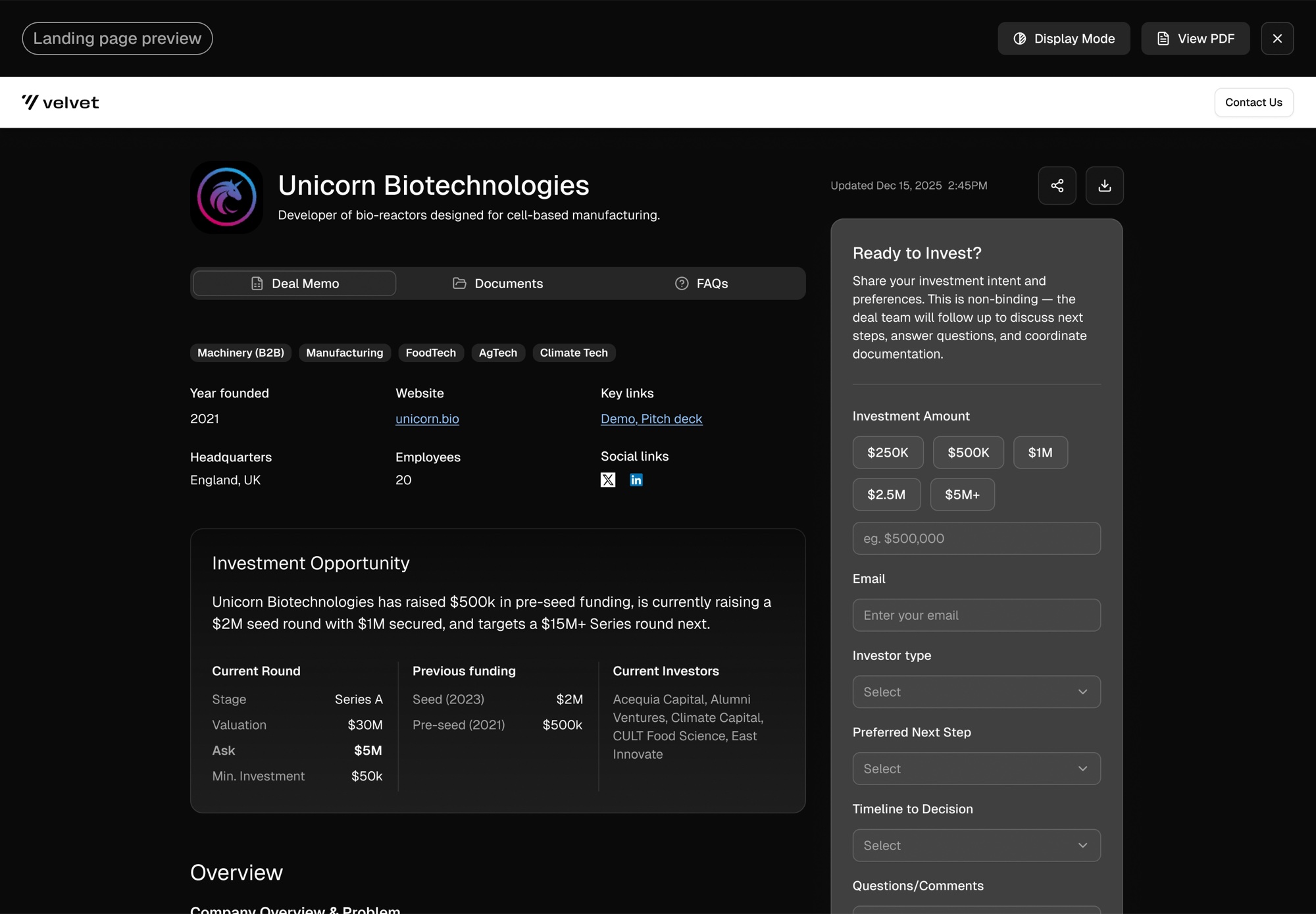
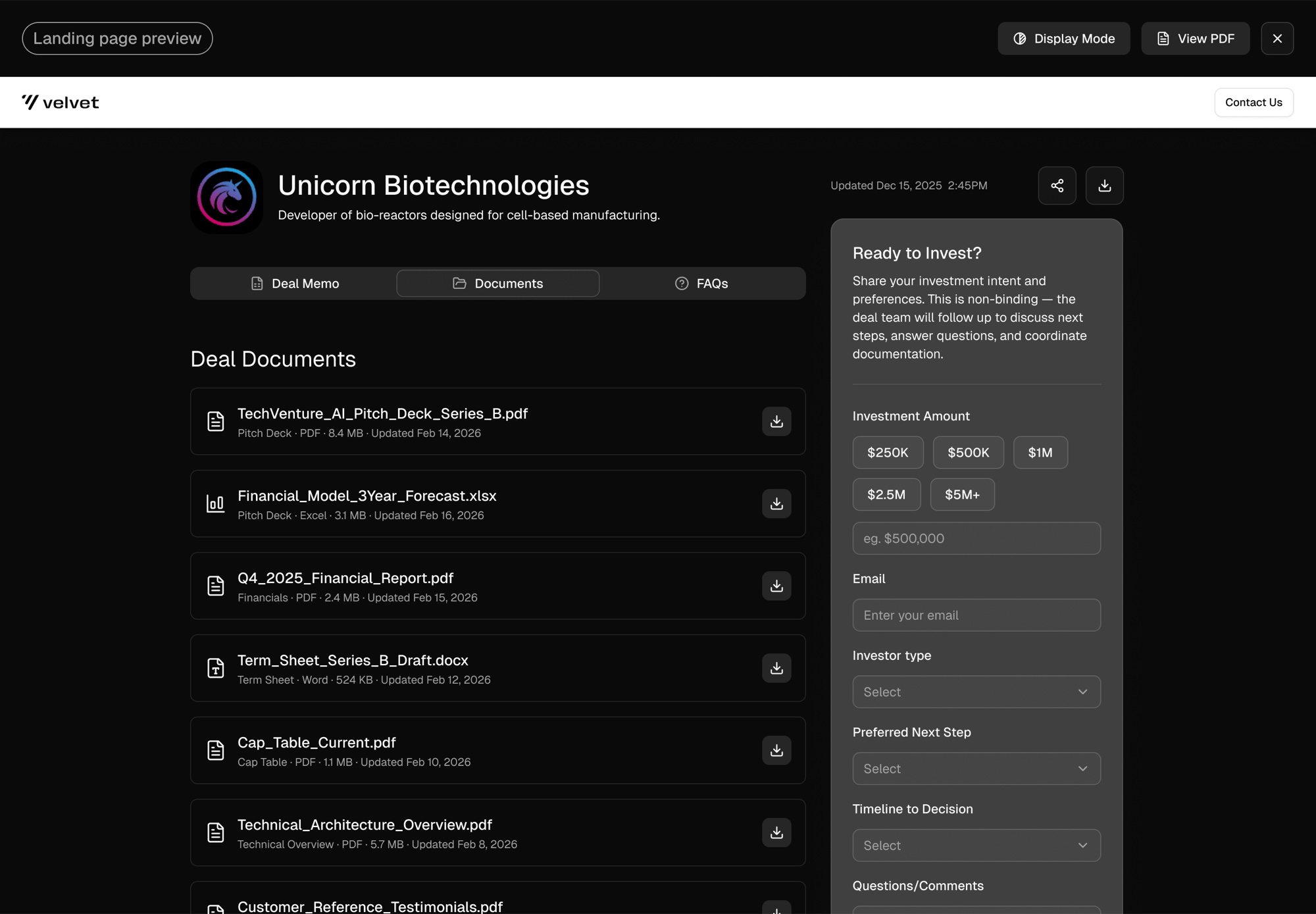
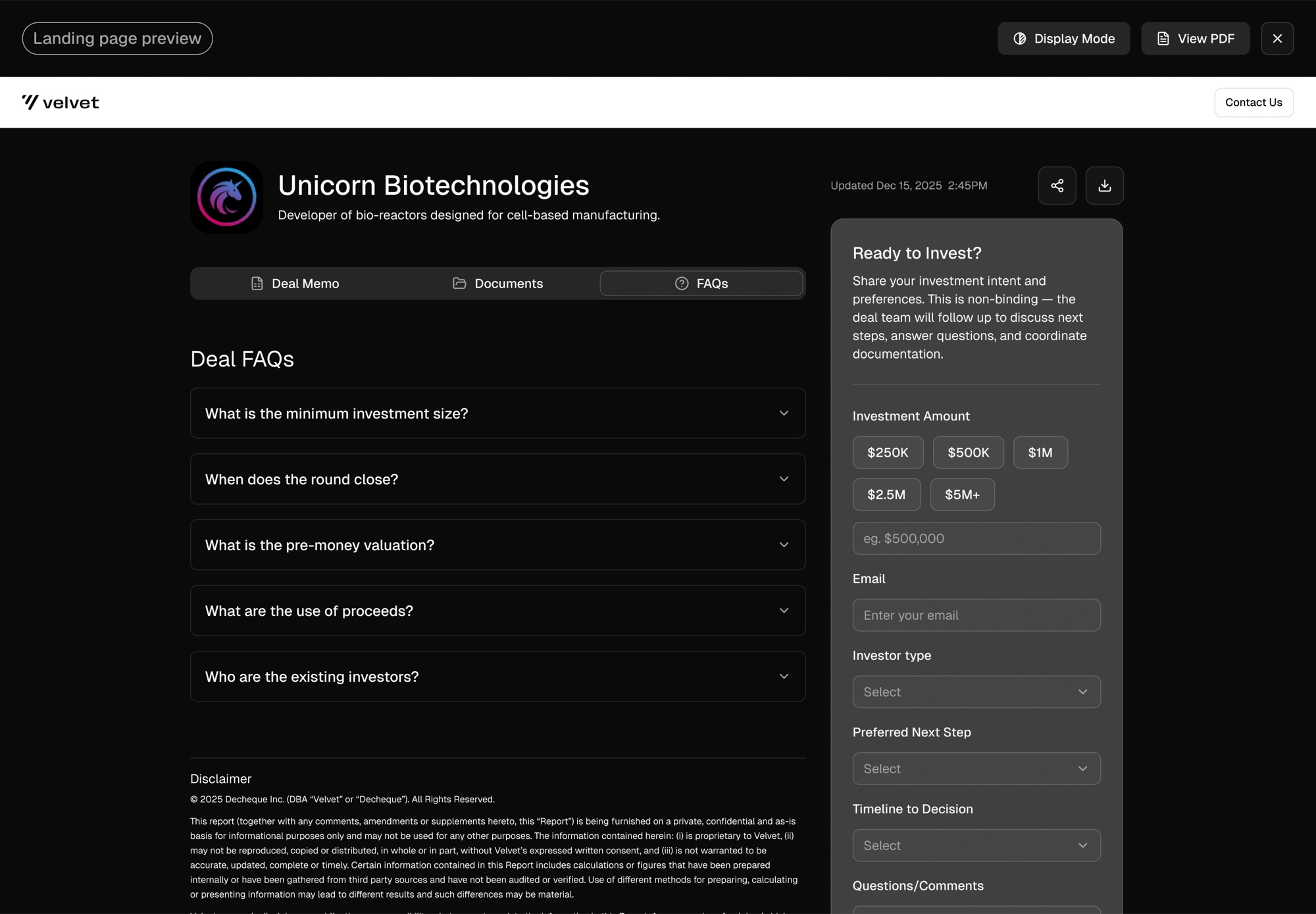
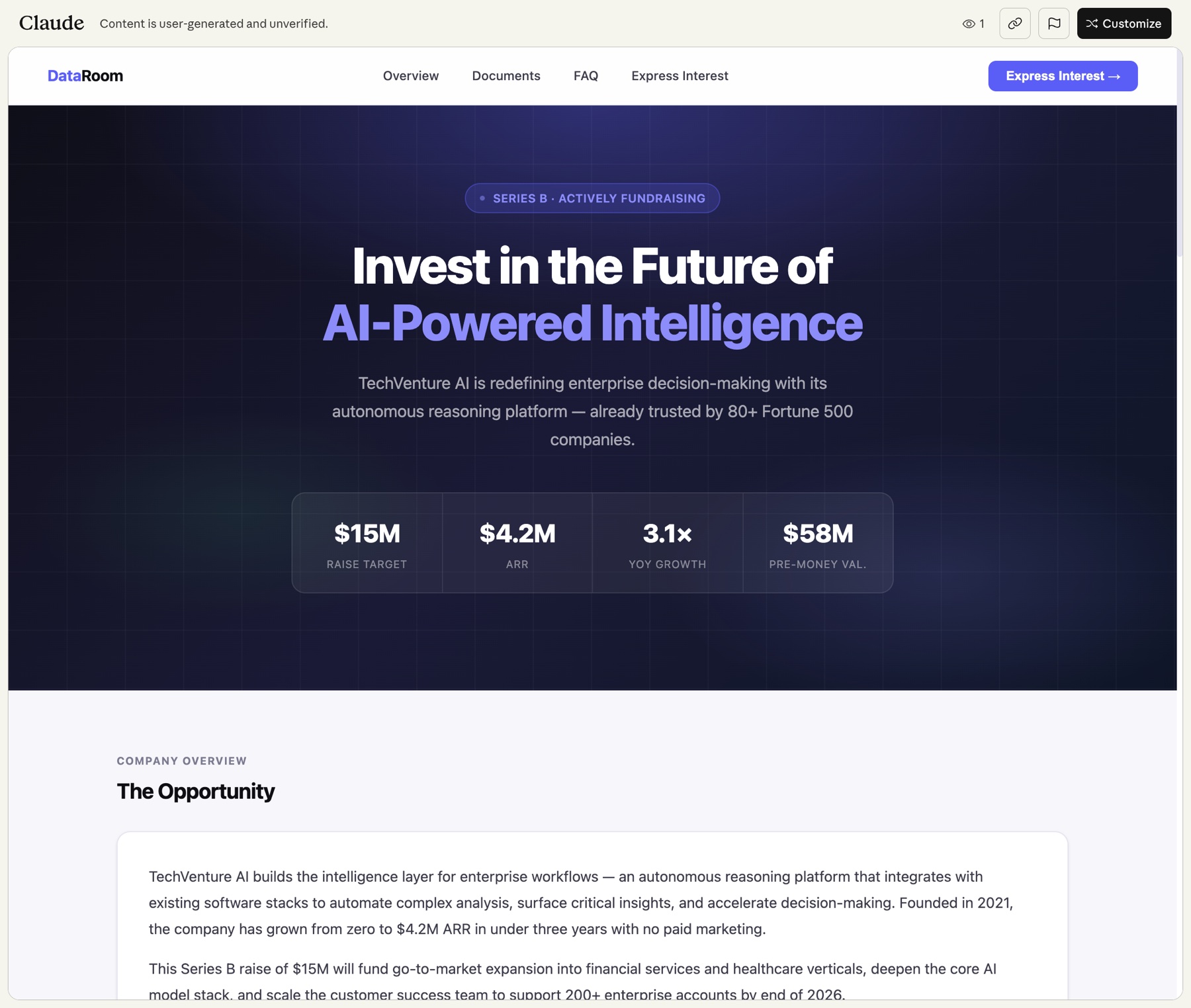
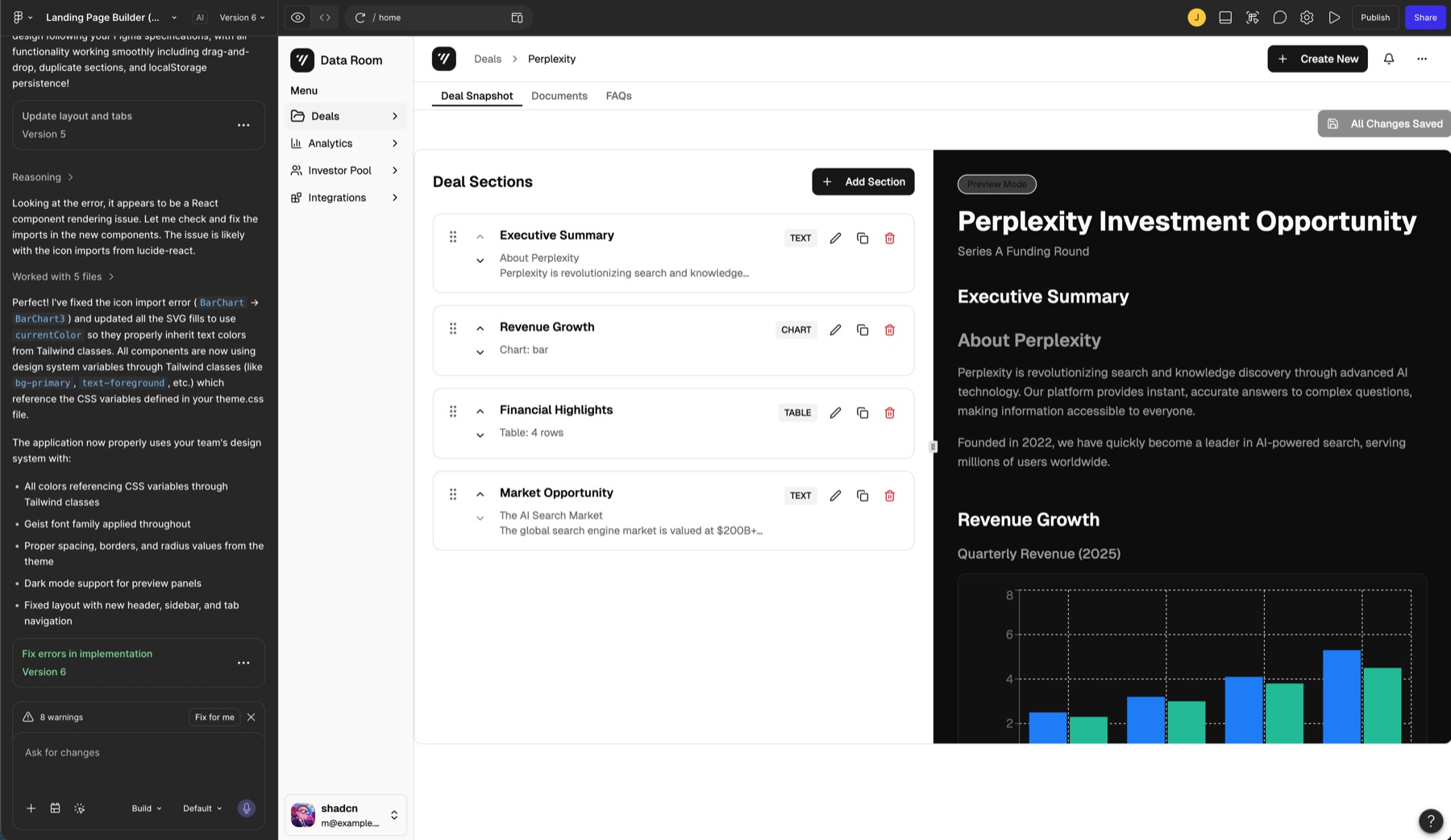
Thirty days after I started, we added a more complex product to the roadmap: the Deal Data Room. I guided the complete concept and prototype in three weeks with no detailed brief.
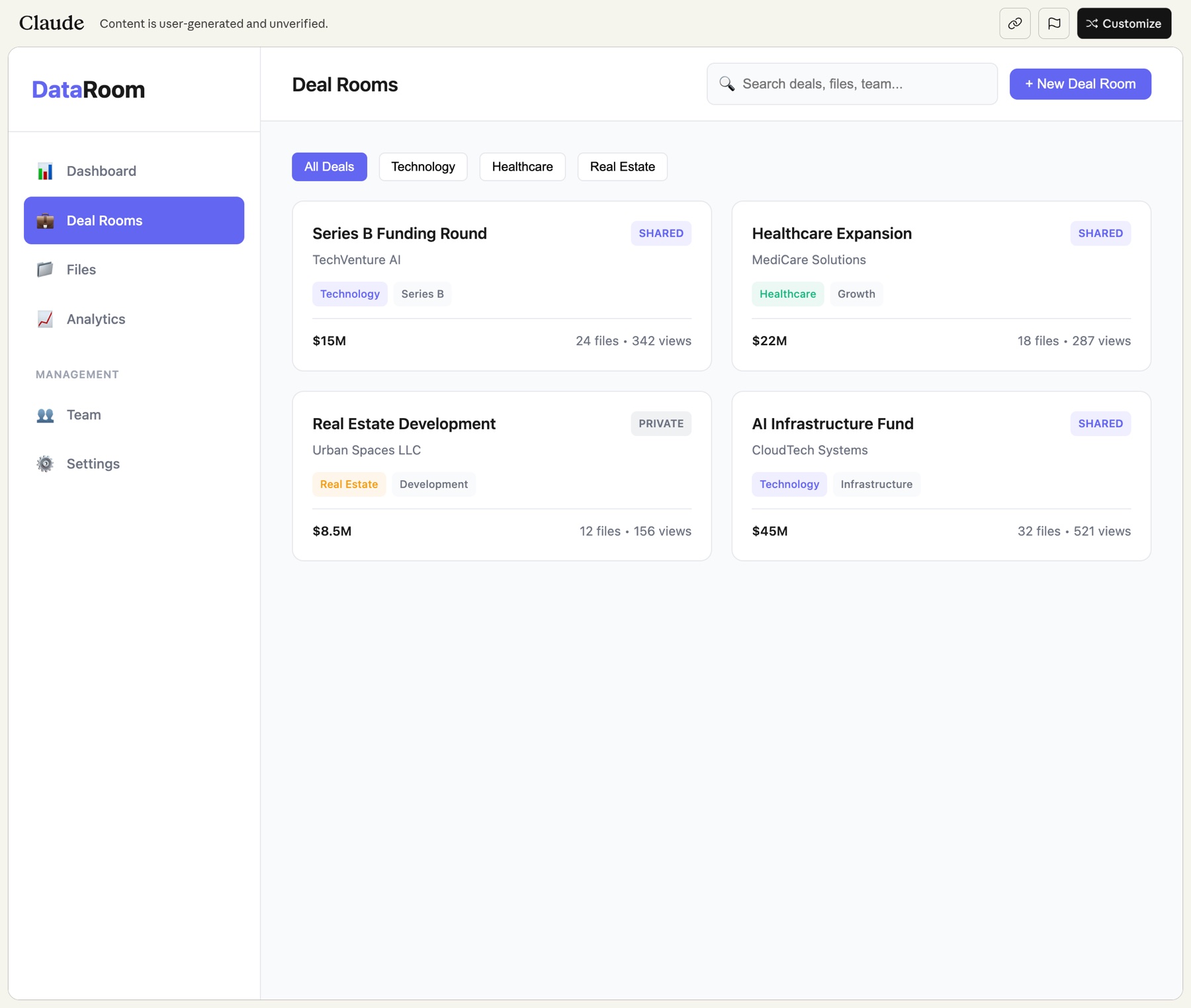
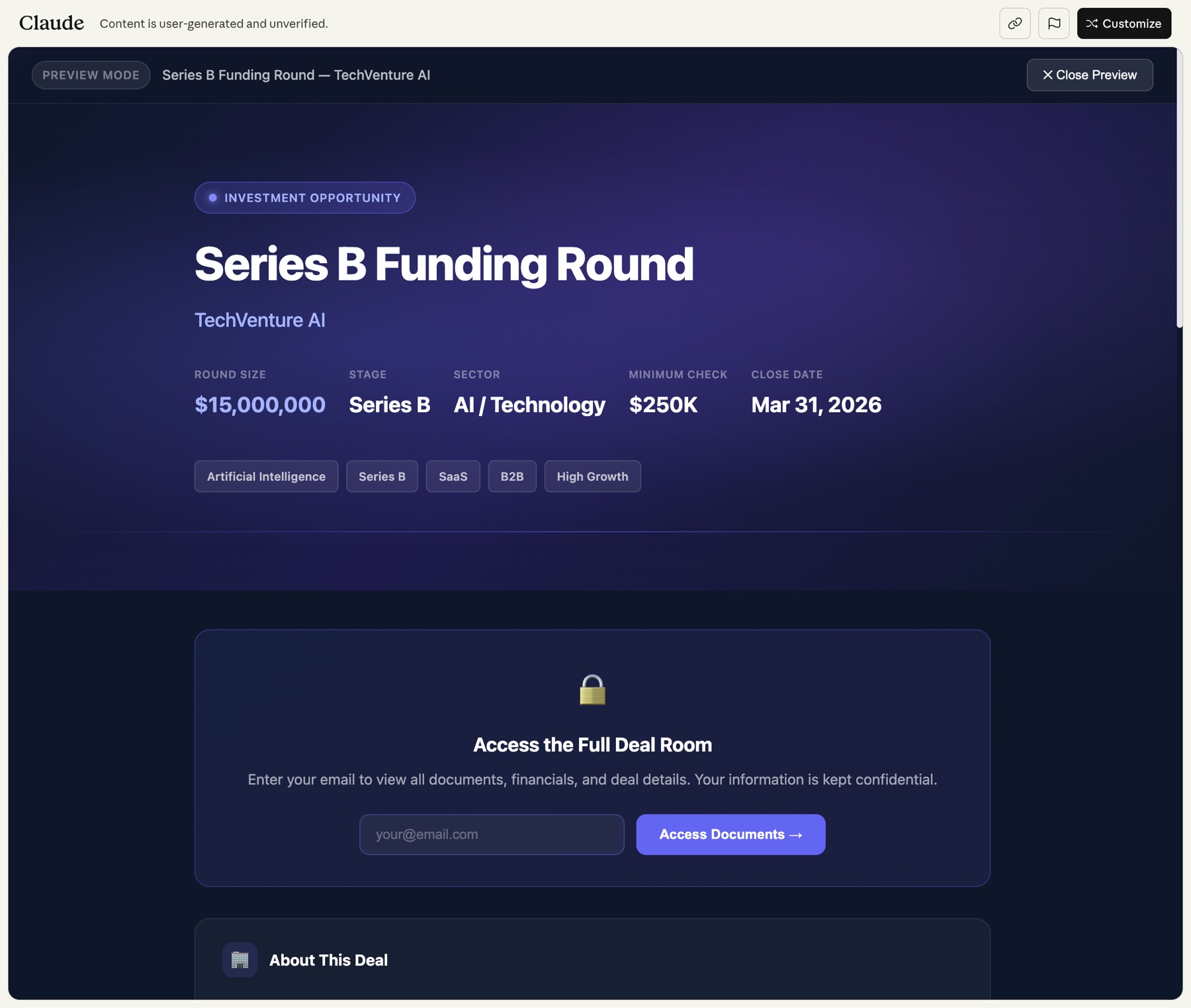
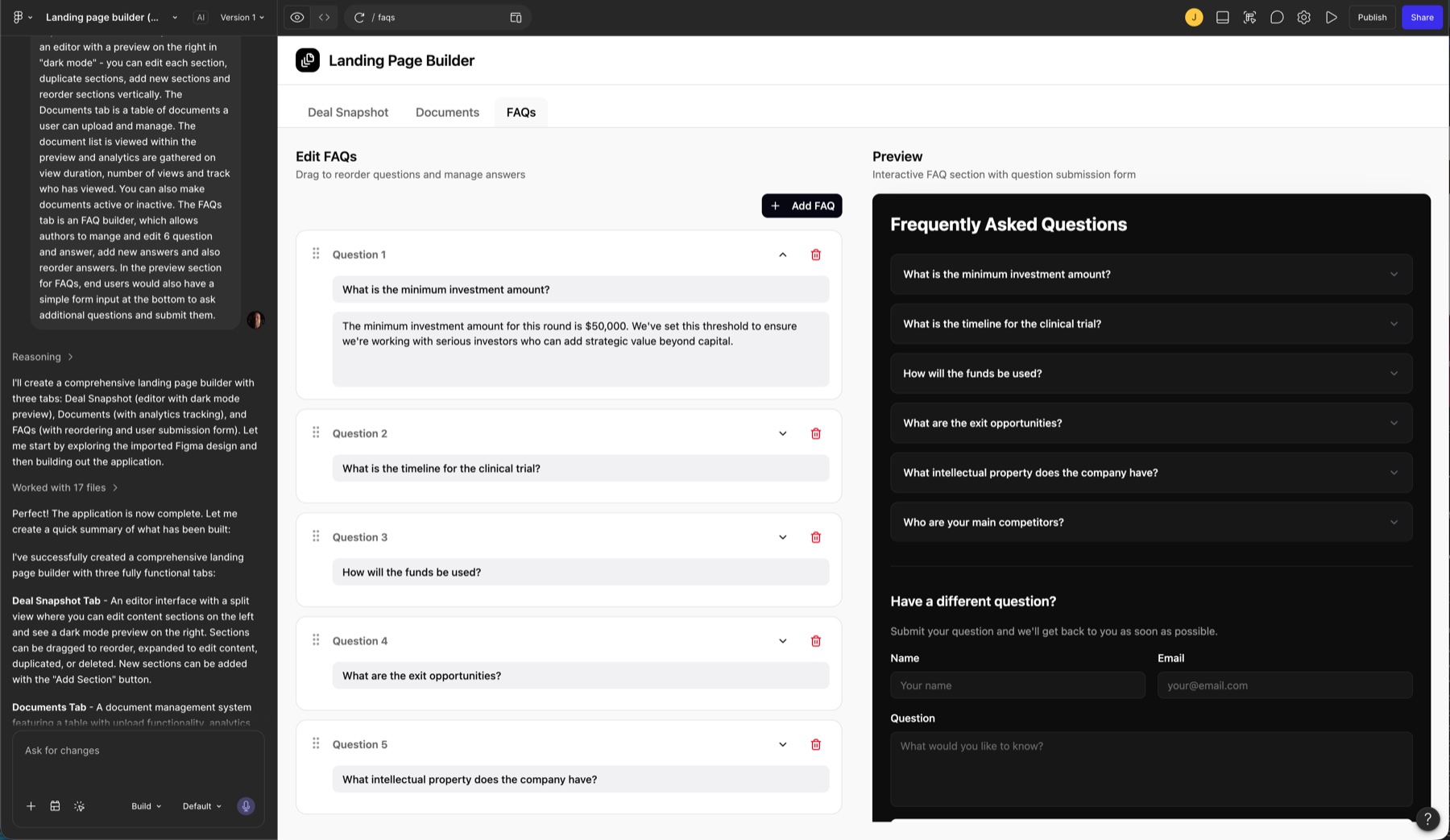
First I had to define what our deal room actually needed to be. I researched best-in-class platforms, mapped the problem space, and then designed distinct views that worked together: a back-end builder the investor controlled, and a clean presentation layer for GPs and co-investors.
Every investor-facing surface had a builder layer behind it. The product also included a PDF builder for GPs who work outside digital workflows, a system tracking who accessed what across the sharing chain, and a built-in investment commitment form, reducing the friction between interest and intent.
My callWith no brief, wrote one through research first, so the team built the right deal room rather than the first one.
An AI-native org, with judgment in charge
The engineering team built with Claude Code. I used Claude and Figma Make to prototype and ideate alongside them. We were AI-native in practice and in product.
Working prototypes replaced descriptions. Instead of explaining what something could be, I could show what it was and get an immediate reaction. That compressed decision cycles significantly, on a team with no time to waste.
Keeping AI in check. AI didn’t replace design judgment. It accelerated the cycle that judgment operates in. I still owned product decisions, prioritization and strategy, and knowing when AI output was drifting from the broader vision and needed correction.
My callThe instinct to set guardrails on AI-generated UI was as important as the instinct to use it.
05Reflection
Adaptation in the AI era.
The product worked. The UX held up. Velvet shut down because the funding environment shifted, not because the tools weren’t valuable.
Looking back, I would have pushed harder for executive focus, and collected and used more user feedback to decide which features to commit to.
For my part, I adapted quickly to a new environment with significant engineering momentum, and started making decisions. I brought coherence and steadiness to a fast-moving team that would otherwise have fragmented.
Design is the hub.
I’ve worked with a lot of talented designers over the years, but what stands out about Jared Porter isn’t simply his ability to produce great design. It’s his ability to create clarity.
What impresses me most is his ability to operate beyond the level of execution. He focuses on building alignment, developing people, and creating the conditions for great work to happen repeatedly.