 All case studies
Case study · Sales intelligence · B2B SaaS
Primary Intelligence
Business Intelligence Suite
TruVoice was the category leader in win-loss intelligence until a well-funded competitor arrived with a modern UI. Working directly with the CEO and CTO, I closed that gap, then pushed past it.
- Company
- Primary Intelligence (TruVoice), acquired by Corporate Visions in 2023
- My role
- Principal Designer
- Timeline
- 2020–2021
- Worked with
- The CEO and CTO, every week
01Context
The category leader in win-loss intelligence
Primary Intelligence’s product, TruVoice, tells sales teams why they win and lose deals. It had more win-loss data than anyone: long-form survey responses, scoring models, verbatim buyer feedback and rep-level breakdowns.
I worked in direct partnership with the CEO and CTO, responsible for how the whole product looked, worked and told its story to buyers.
02The problem
The legacy leader, losing on looks and credibility.
A well-funded competitor arrived with a modern UI, and suddenly “best data” wasn’t enough. Buyers noticed the gap. Sales felt it.
But the product problem wasn’t aesthetics. It was legibility. What TruVoice lacked was a way to make its data feel like direction. Survey responses and scoring models sat behind interfaces that made insight feel like homework.
What the business needed:
- To win back buyers’ confidence in demos, against a competitor that looked newer.
- To turn the deepest dataset in the category into answers executives could act on.
- To do both without disrupting the customers who already relied on the product.
03The strategy
Two bets: look like a category leader, then work like one
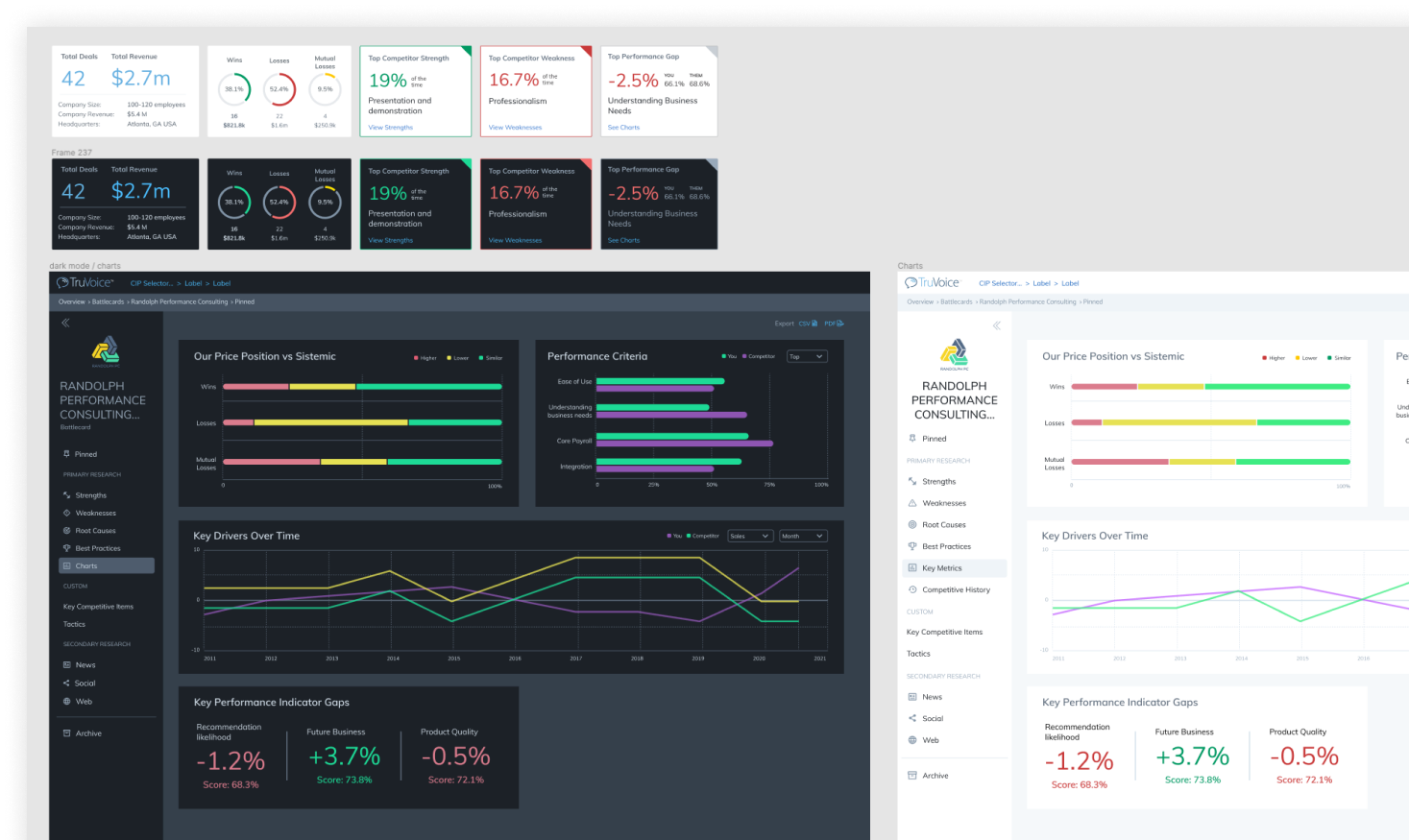
Working directly with the CEO, I identified two bets. First, make the product look like a category leader. Then make it work like one, by building visualizations that translated raw feedback into clear commercial signals.
Not just a visual refresh, but a rethinking of how complex survey and text data could drive decisions, not just reports.
The design wasn’t decorative. It was the argument that TruVoice still belonged at the executive table.
04The work
From data delivery to decision support
An audit of where the product felt dated
The UI modernization started with a full audit of where the product felt dated against its new competitor: navigation patterns, typography, data density and color language. We rebuilt those surfaces while keeping continuity for existing customers.
My callBenchmarked against the product buyers were actually comparing us to, so the redesign answered the sales team’s real objections.




The audit wall: competitor and best-in-class products we measured TruVoice against.
Legibility, not aesthetics
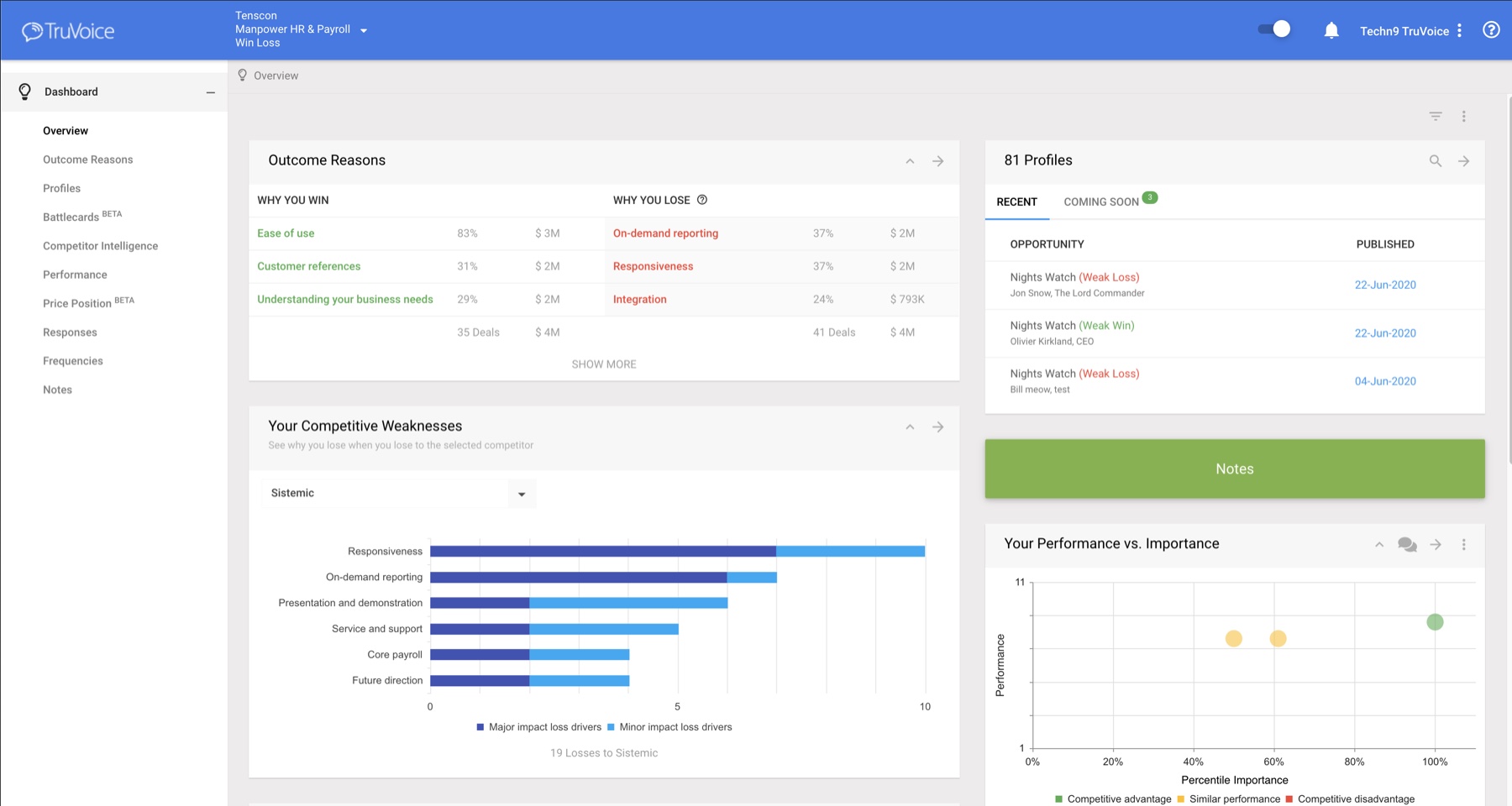
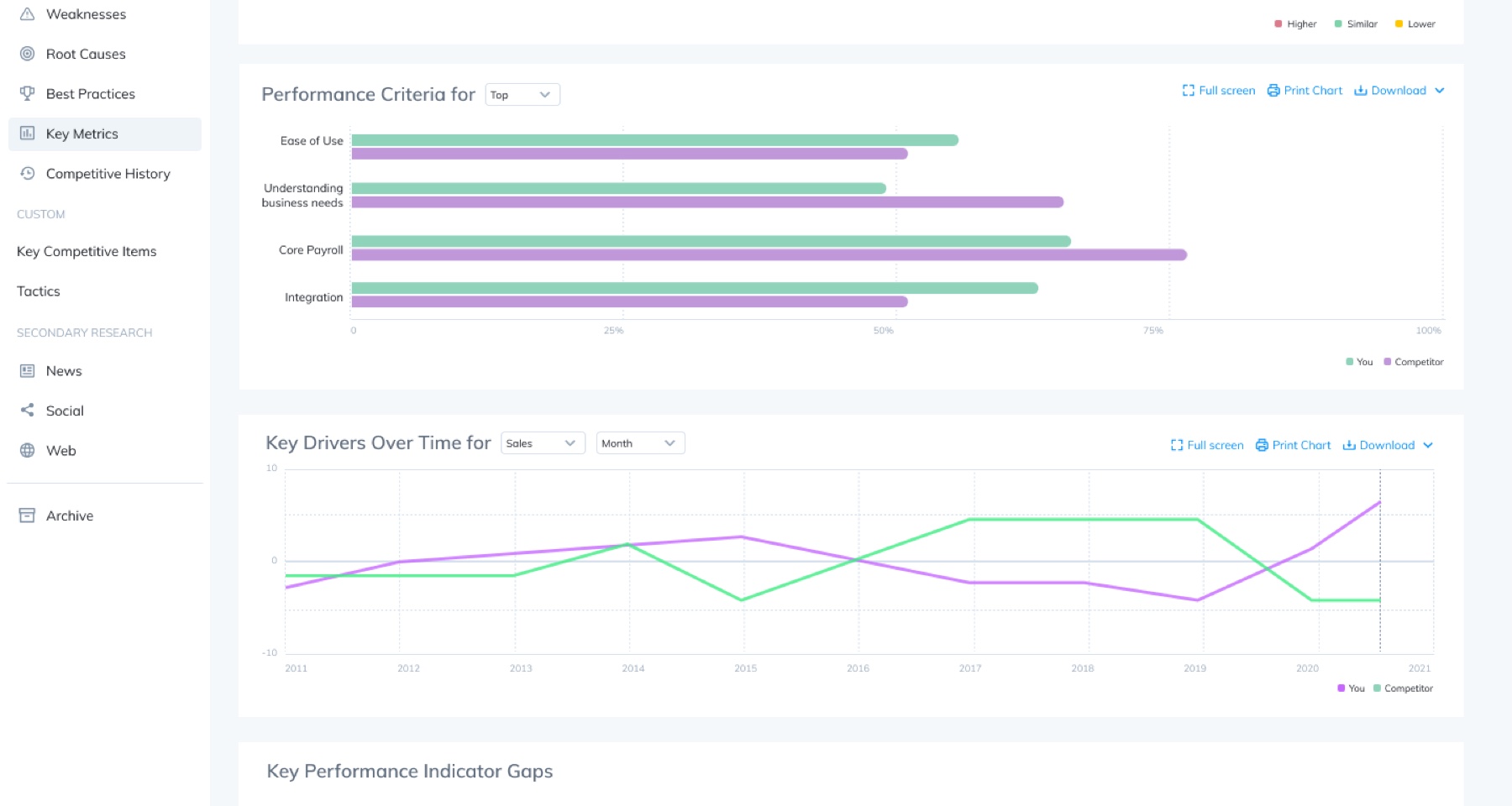
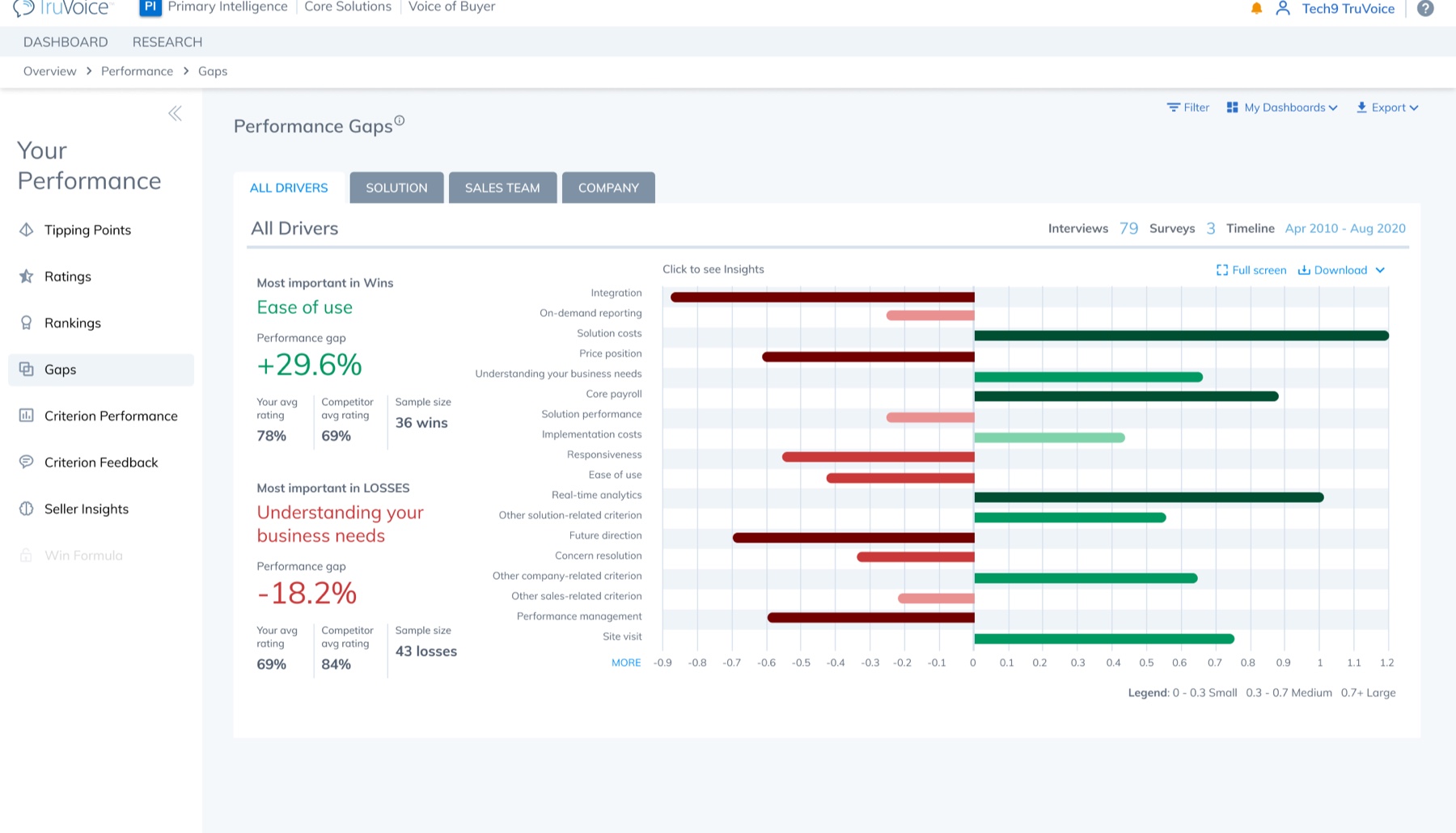
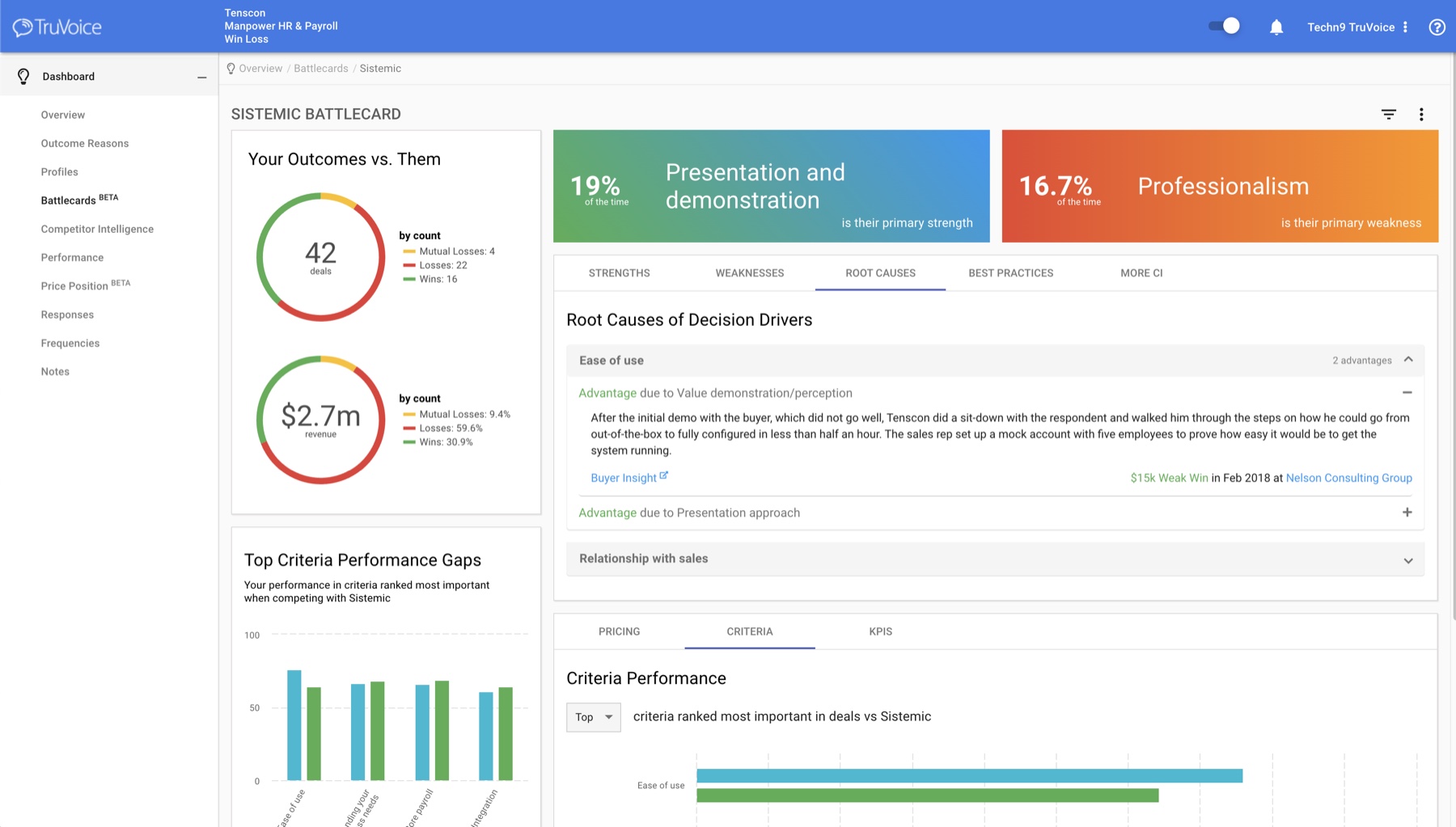
We rebuilt the core screens around one question: what should a sales leader understand in the first five seconds? Every screen moved from showing data to showing a signal.
Before
After
Visualization patterns that answer the question first
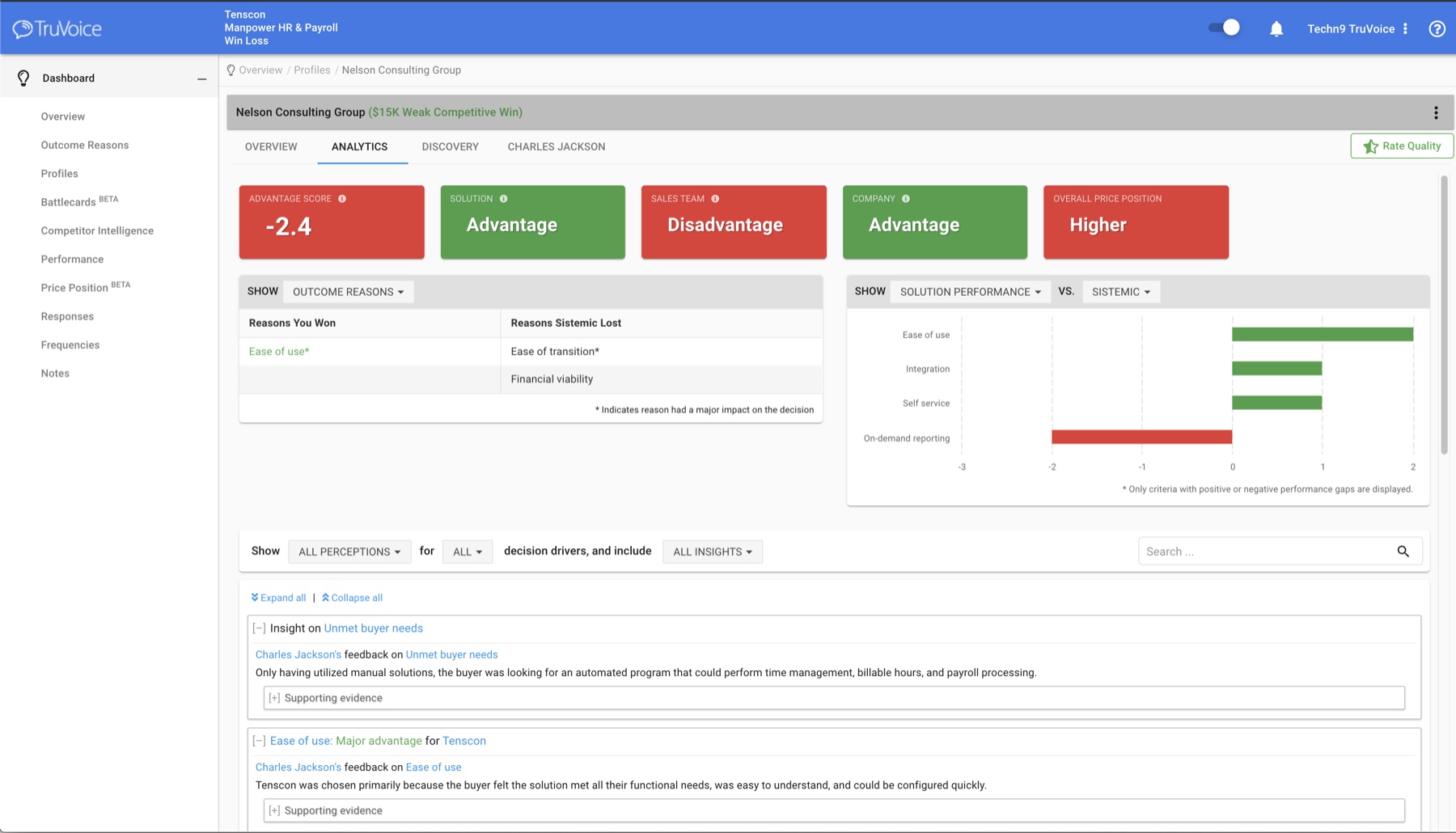
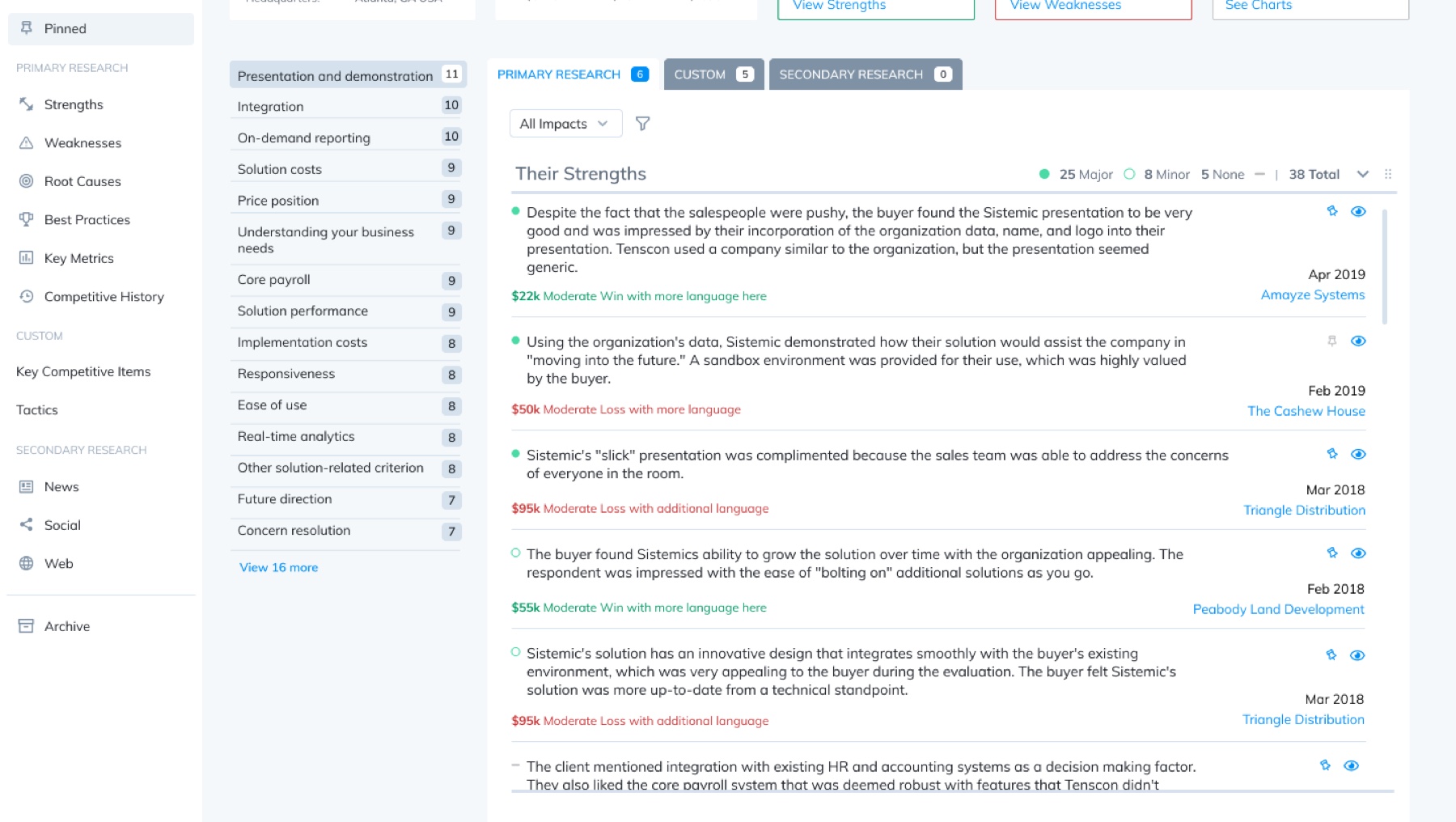
The harder work was the visualization layer. Win-loss data is inherently messy: sentiment, scoring, verbatim text, rep-level breakdowns. I worked with the CEO and CTO every week to develop interfaces that surfaced patterns, not just data points.
Where is this account losing? Is it the product or the rep? Is this a pricing story or a trust story? The goal was an interface that answered the question before the customer had to ask it.
My callA weekly rhythm with the CEO and CTO: objective, options, questions, decisions. It became the operating model.
05Results
From catching up to leading again
1 cycle for the modernized UI to outpace the new competitor in buyer perception
$27M valuation when Corporate Visions acquired the company in 2023
Weekly design partnership with the CEO and CTO throughout the engagement
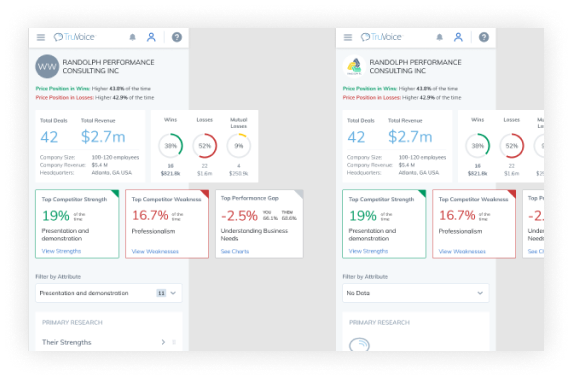
New tools and visualizations moved the product from data delivery to decision support.
06Reflection
Direct partnership with the executive team.
The CEO and CTO didn’t need a designer who waited for a brief. They needed someone who could take their intentions (the story they wanted to tell, the problem they wanted to solve) and turn them into something buildable and compelling.
That weekly rhythm of objective, options, questions and decisions became the operating model. They trusted me not just to execute but to push back, reframe, and occasionally tell them what the product actually needed.
That kind of partnership is what I look for in a VP role. Not just a seat at the table: contribution at it.
Build with, not for.
Working with Jared has been amazing. He is truly talented and really strives to understand everything so that he is able to deliver a better product. He is awesome to work with. I will always be grateful for the work he has done for us.