 All case studies
Case study · Fintech · Accounting
Teleport Facta
Accounting Automation
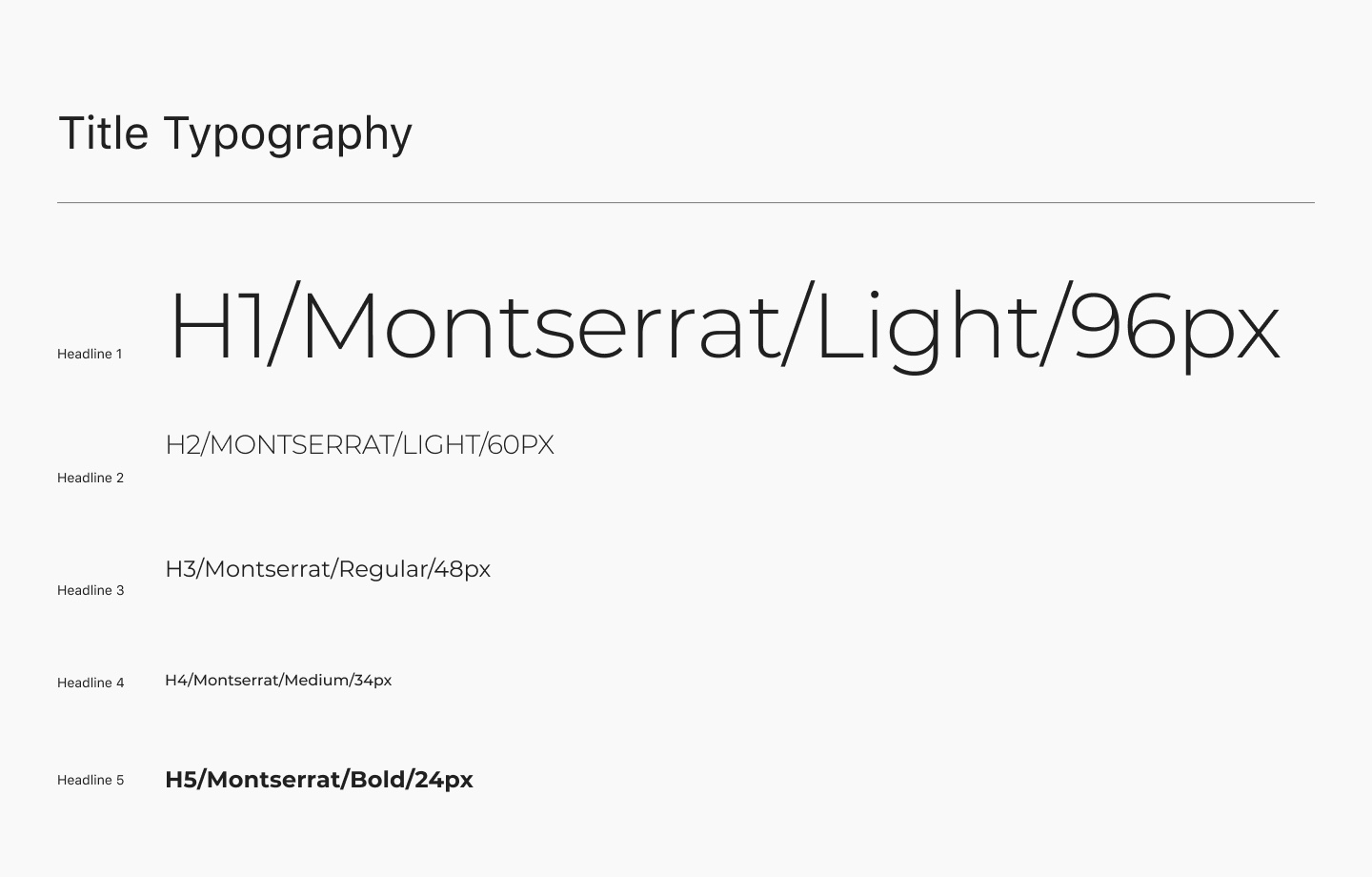
A founder with a spreadsheet and a thesis. I joined as Founding Designer to build everything from scratch: the brand, the design system, and the UX logic that made complex financial workflows feel approachable.
- Company
- Teleport Facta
- My role
- Founding Designer
- Timeline
- 2019–2020
- Worked with
- The COO and the CPO and co-founder, across Utah and San Francisco
01Context
No product. Just a spreadsheet and a thesis.
A corporate accountant knew reconciliation was broken. He had conviction. He had no product.
I joined as Founding Designer to build everything from scratch: brand, system, and the UX logic that would make complex financial workflows feel approachable to the people actually doing the work.
02The problem
Reconciliation was broken.
Months of manual work, high error rates, no automation, and no visibility into where anything stood.
What the business needed:
- An MVP that could sell, built from nothing but the founder’s thinking.
- The trust of accountants who live in spreadsheets and expect precision.
- A product that stood out in a dull category.
“B2B fintech with a B2C-like experience: approachable, clean, and elegantly simple.”
03The strategy
Founders know their problem. I know how people experience solutions.
That gap is where the interesting work happens.
The COO knew his domain cold: corporate accounting, reconciliation workflows, the pain his users felt every month. My job was to reflect his thinking back, probe the assumptions, and offer alternatives until we found something better than what we started with.
“Jared became a trusted contributor and advisor to our initial product decision-making.”
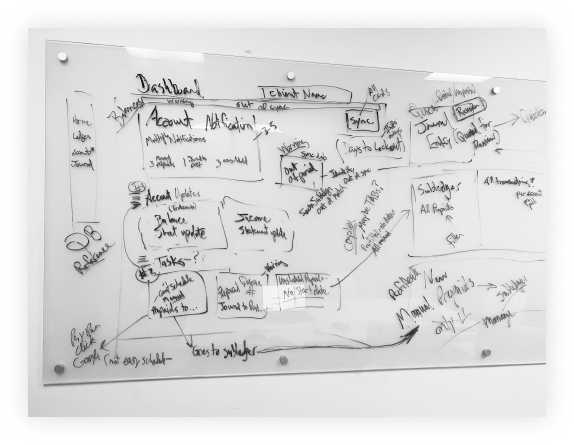
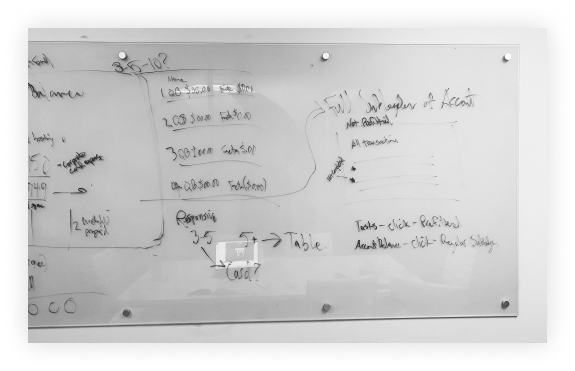
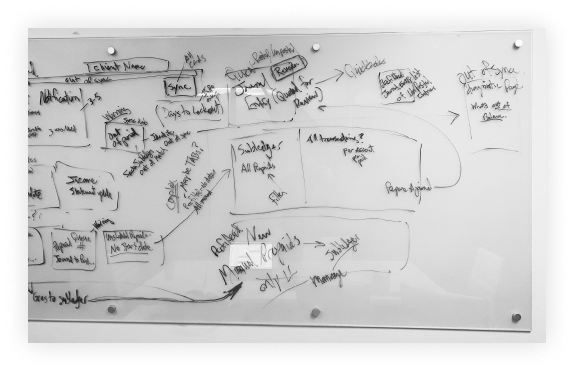
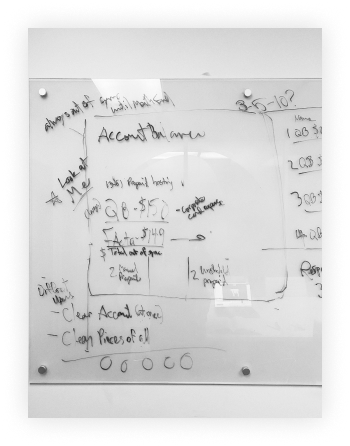
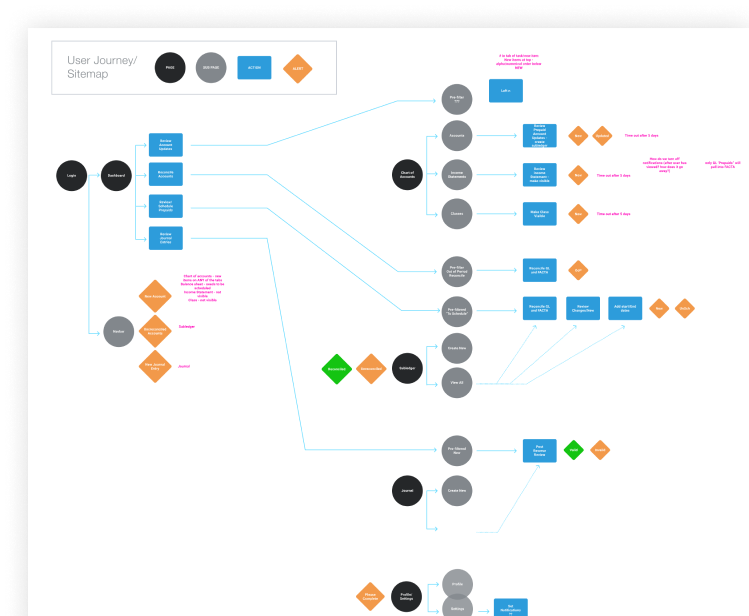
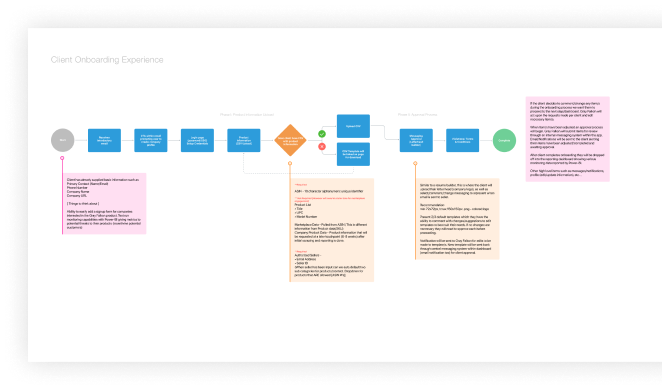
Whiteboarding sessions in Utah and San Francisco, mapping pages, features and user paths.
04The work
Complexity when the work demands it. Simplicity everywhere else.
Designing from the founder’s spreadsheets
There was no product brief, just the founder’s thinking in spreadsheet form. The COO’s own Excel wireframes became raw material to design from, alongside journey maps that surfaced the friction.
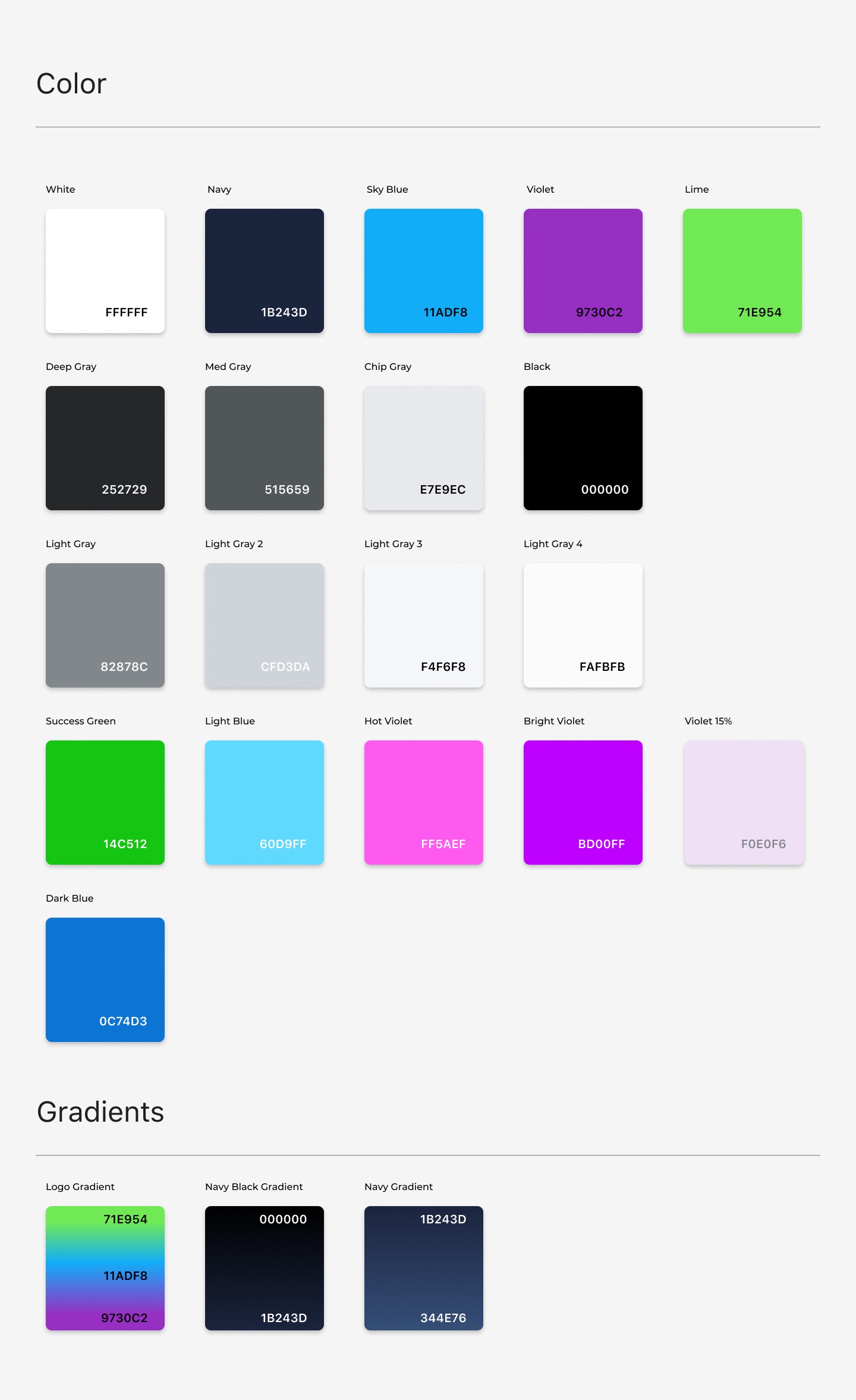
The design system, the navigation logic and the status visibility patterns all grew out of those sessions.
My callStarted from the founder’s own artifacts rather than replacing them, so the product spoke his users’ language from day one.
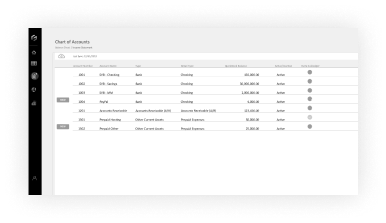
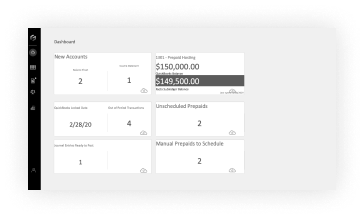
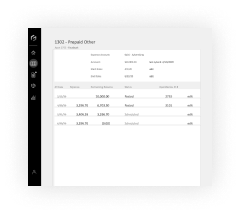
Where it started: the COO’s Excel wireframes.
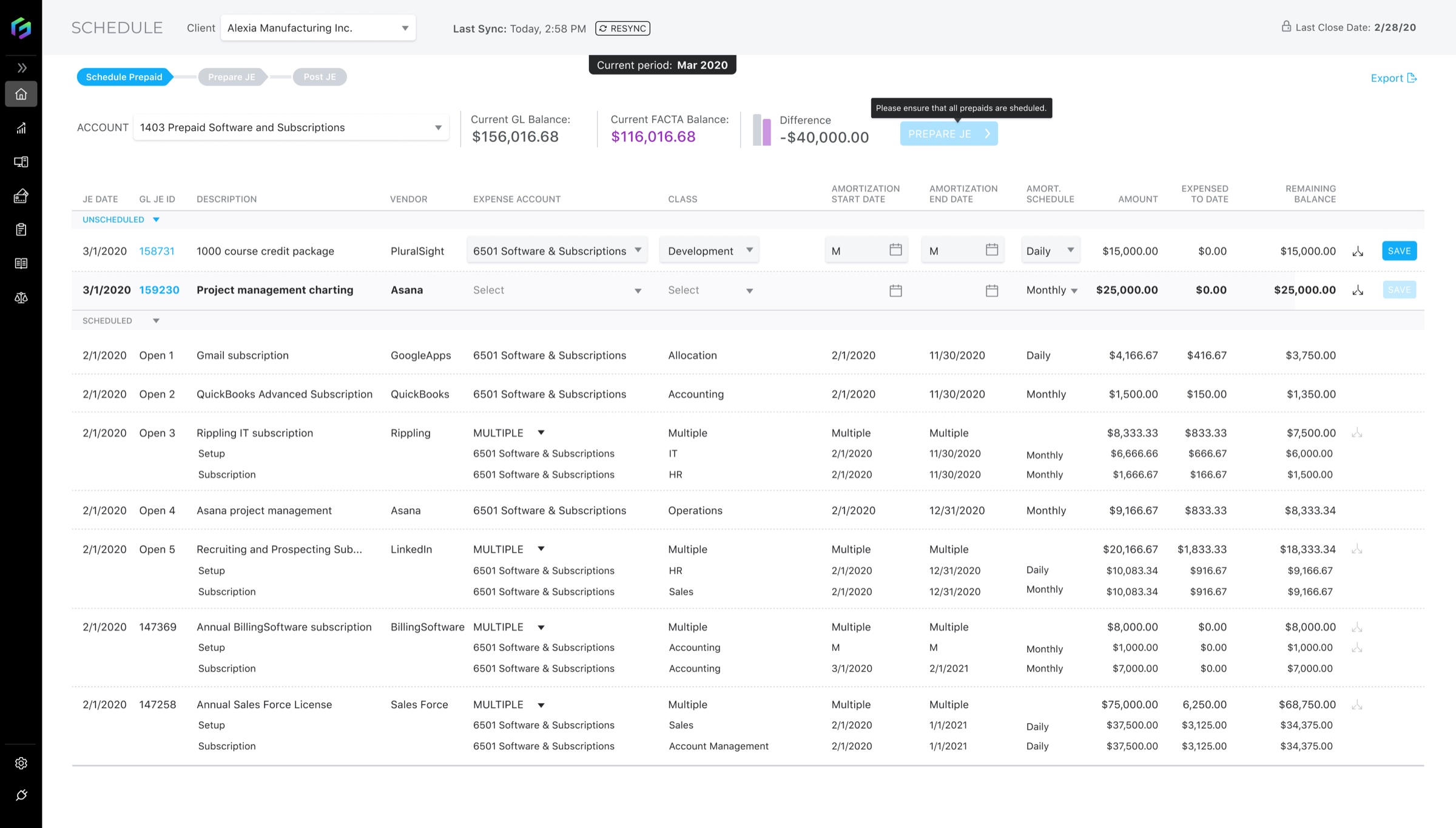
One month-end close, start to finish
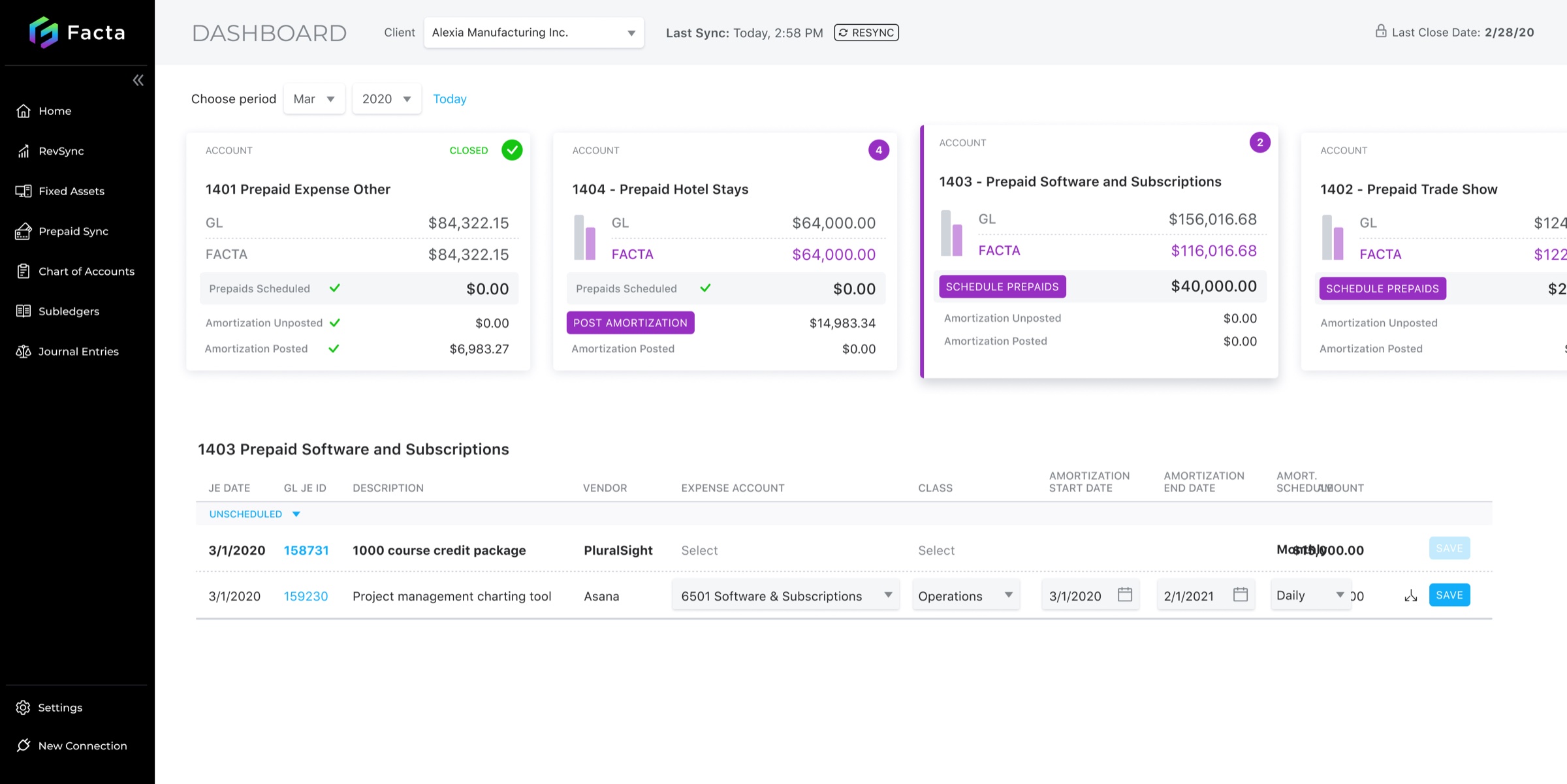
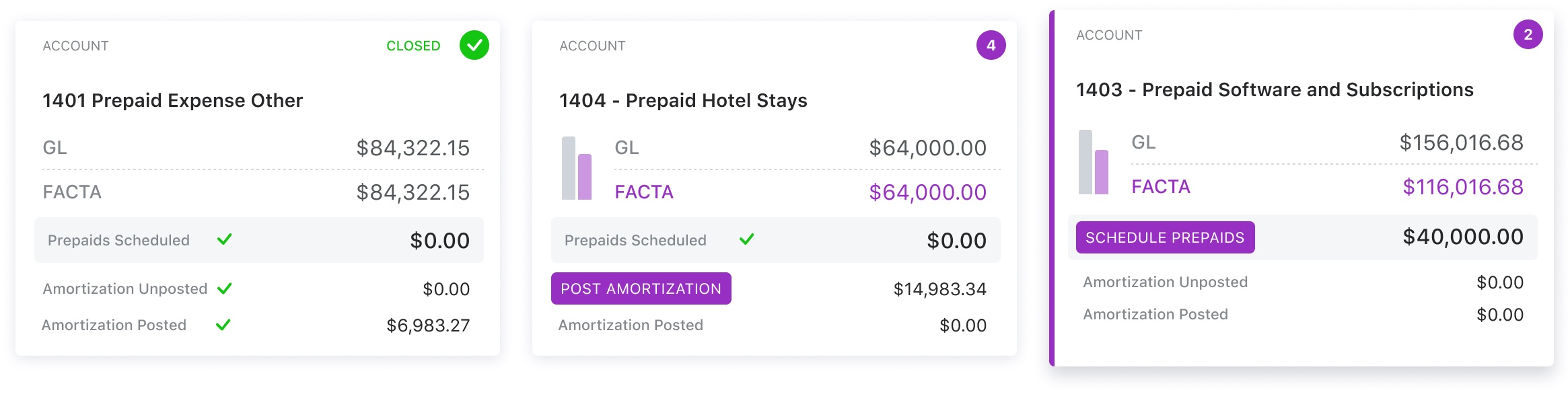
Closing a month in Facta follows the accountant’s own sequence: pick an account, bring in its prepaids, schedule them, post the journal entry, and confirm the general ledger and Facta agree.
Each step shows only what that step needs, and the dashboard keeps score until every account is closed.
Bulk editing at month end
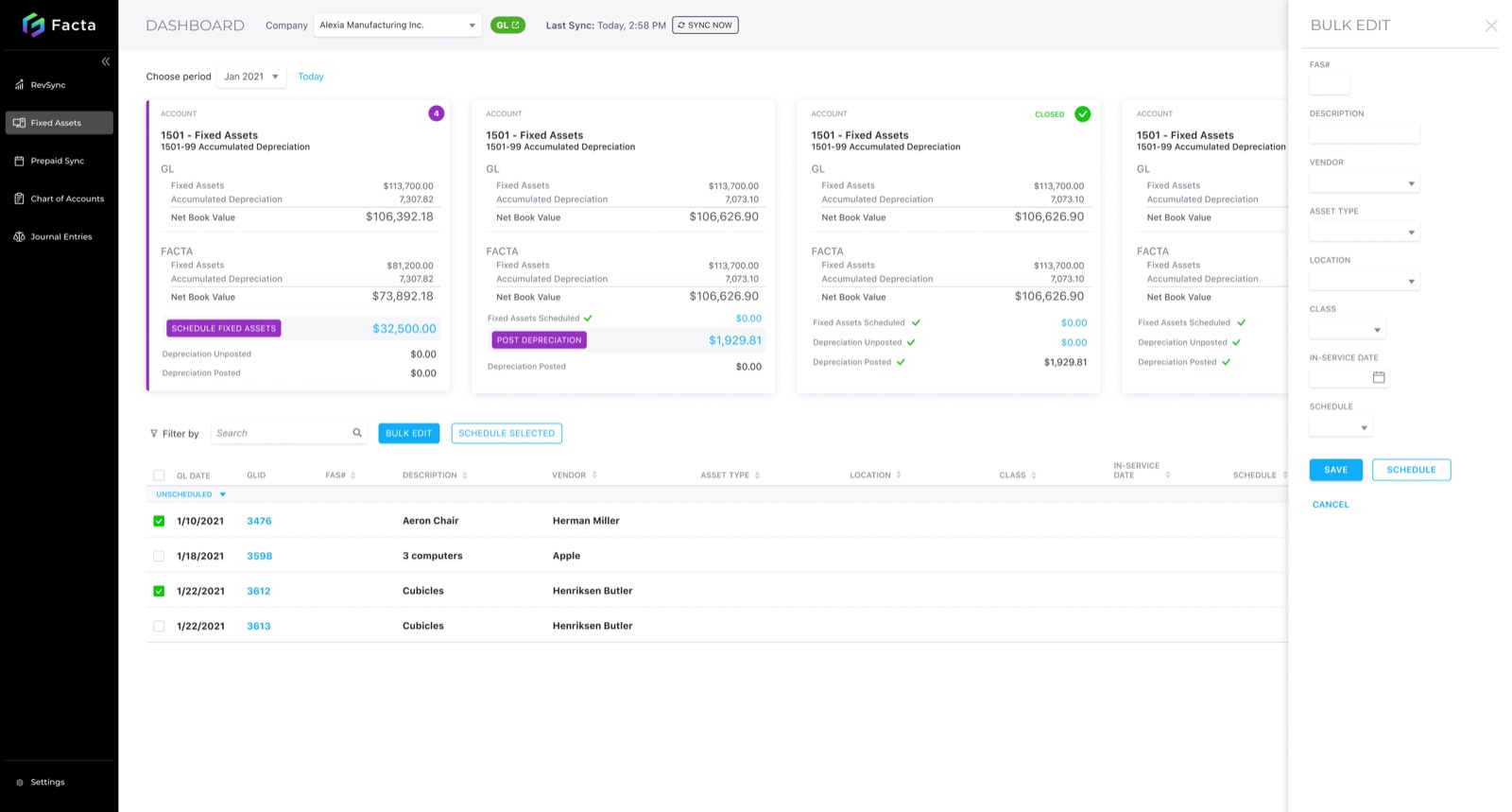
As Facta grew from prepaid expenses into fixed assets, accountants needed to schedule dozens of purchases at once: every laptop, chair and cubicle bought that month.
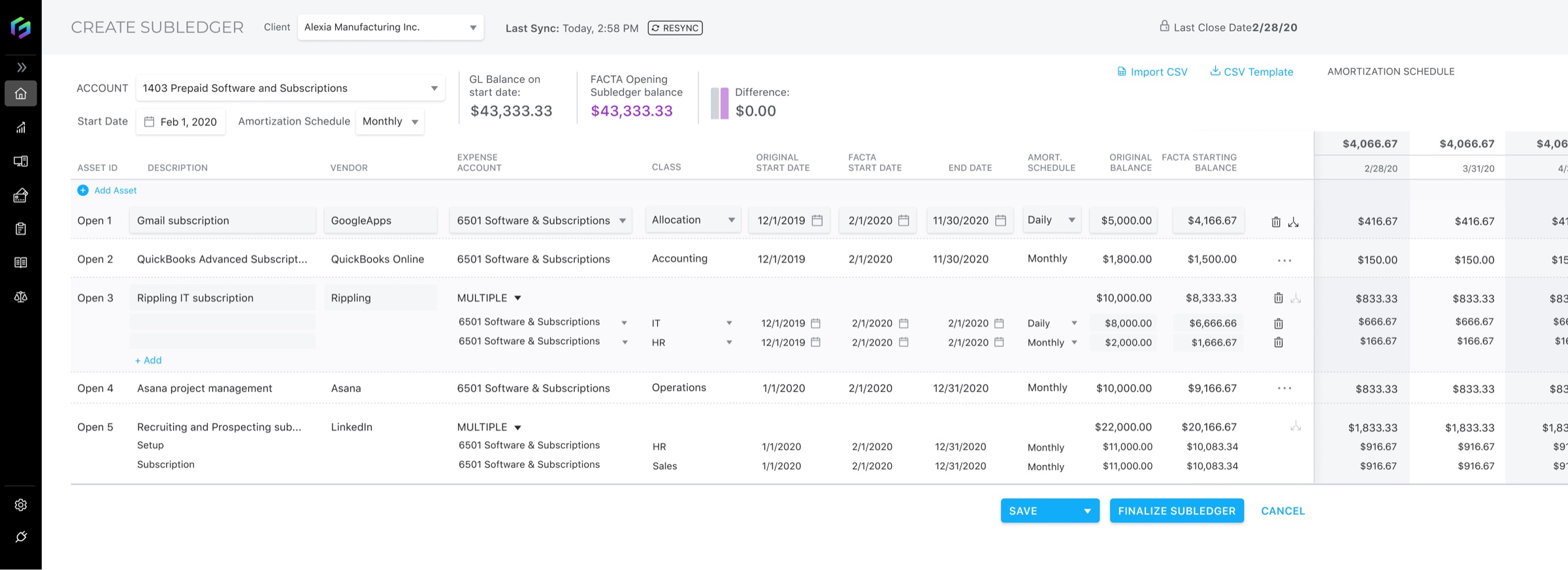
I designed bulk editing for that rush. Select the rows, set what they share once in a side panel, and schedule them together. Inline editing on the schedule handles the exceptions without leaving the table.
My callDesigned for the common case first: one pass for what most rows share, inline editing for the few that don’t.
The llama
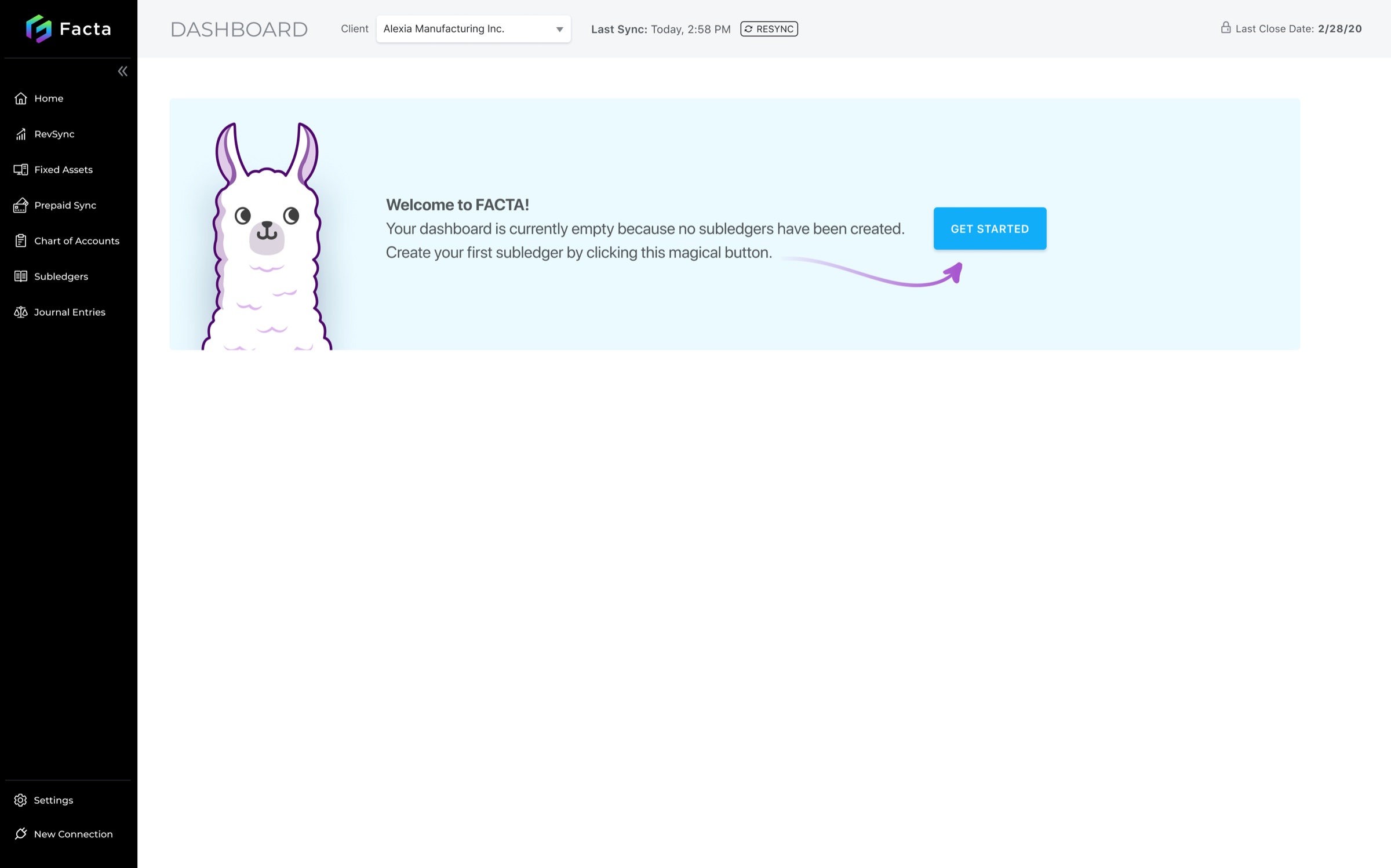
The COO wanted his users to feel something specific at the end of each month: peace. The exhale after closing a brutal reconciliation cycle.
We explored zen, relief and earned rest, and landed on a meditative llama mascot who greets you at onboarding and reappears at the summit when everything balances. The team loved it. Users loved it. It became a selling point.
It worked because we understood the job wasn’t just calculating numbers. It was making accountants feel like the hill was climbable.
My callDelight isn’t decoration. It’s signal.

05Results
Design became the sales pitch
$10M+ sales pipeline within 6 months of launch
0 → 1 MVP designed and shipped from nothing
The founding team cited the design as a primary sales differentiator.
06Reflection
Built to grow.
Facta was a clean engagement. The work landed with the founders and the market responded.
I did miss the chance to see the product grow up. Producing an MVP has its distinct rewards. So does shepherding a product long term. The Facta workflows, the simplicity constraint, the llama: user feedback and business objectives always create new challenges and demand continual evolution.
Shipping is just the beginning.
Jared became a trusted contributor and advisor from day one — passionate about what we were building, fast to learn the domain, and disciplined about maintaining simplicity under pressure. The design has been a primary sales differentiator. $10M+ pipeline in the first 6 months since launch.