 All case studies
Case study · Fintech · Venture capital
Aumni KPIs
Investment Performance Tracking
Over 18 months I led the design of a new product that turned Aumni from a reference library investors checked now and then into an active portfolio intelligence platform.
- Company
- Aumni, a J.P. Morgan company
- My role
- Vice President, Sr. Product UX Design Lead
- Timeline
- 2024–2026
- Worked with
- Executive leadership, product, sales, engineering and operations
01Context
A best-in-class product people rarely needed to open
Aumni turned venture capital’s legal documents into data. Investors uploaded their deal paperwork, and Aumni read and summarized it, so a firm could see the terms behind every investment in its portfolio.
That ingestion was best-in-class. But investors only needed it occasionally. Deals close infrequently, and documents don’t change once they’re signed. Engagement was limited by the product’s own design.
I was asked to lead the design for a new product line: KPIs, a way for investors to collect, check and read the performance of the companies they’d invested in. I partnered directly with executive leadership, sales and product, and owned the design end to end, from the first workshops to the screens engineering built.
02The problem
Limited customer engagement and competitive erosion.
Legal documents tell you what you own. They don’t tell you whether an investment is thriving or failing.
Competitors like Standard Metrics were gaining ground with real-time portfolio performance data. We had the legal data advantage. We were losing the stickiness battle.
What the business needed:
- A reason for investors to come back between deals, every reporting period rather than every funding round.
- An answer to competitors’ live performance data, built on the legal data only Aumni had.
- Growth that compounds: a product that gets more valuable as more investors and founders use it.
03The strategy
The strategic bet: connect both sides of the deal
KPI ingestion meant a new product surface, new internal teams and new customer interfaces, all built from scratch. I facilitated the workshops with leadership, sales and product, and created early concepts to anchor the conversation, so we argued about something concrete rather than abstractions.
I pushed toward ideas with network-effect adoption potential, including a subscribe-to-metrics model that shaped the product’s long-term direction. Instead of Aumni chasing numbers, investors would request them and founders would report once to everyone they answer to.
VC firm
The investor
- Authors and manages data requests to the companies it has invested in
- Verifies, edits and monitors the data
Aumni
The platform
- Ingests and summarizes documents and data
- Connects investors and founders
PortCo
The portfolio company
- Access to its investor network
- KPI reporting tools
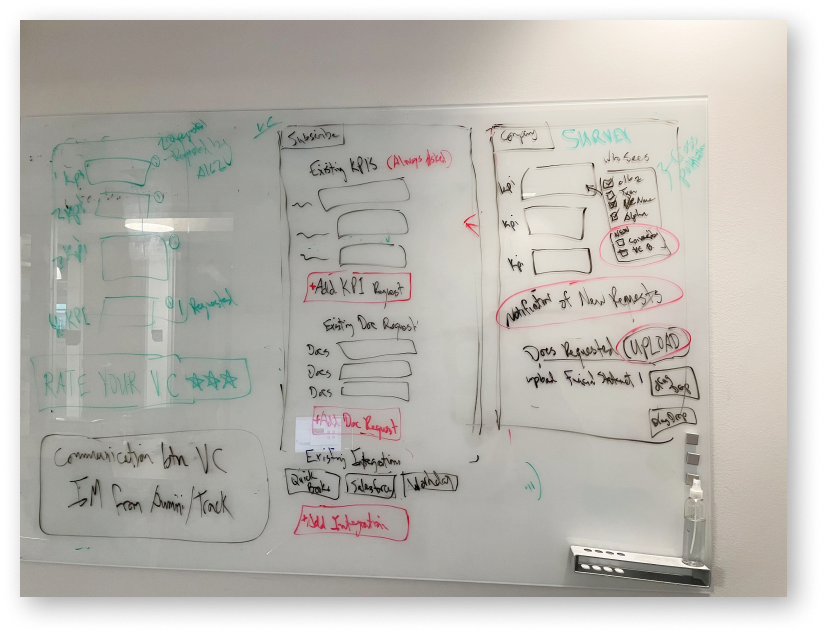
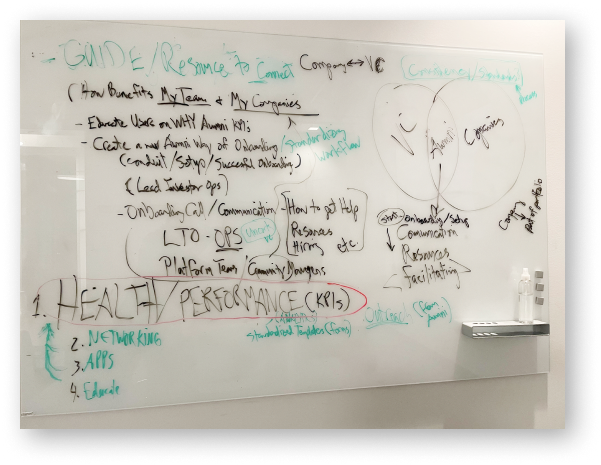
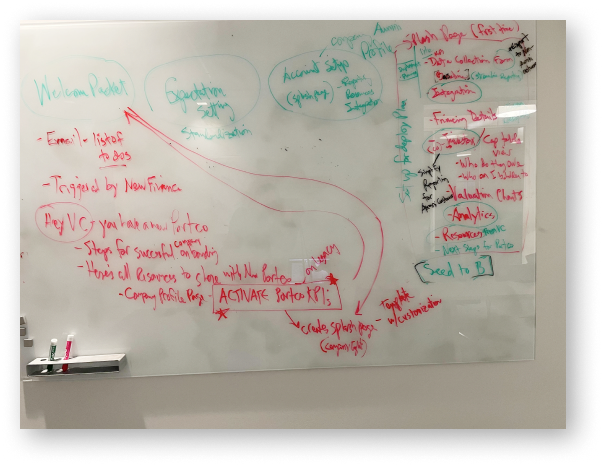
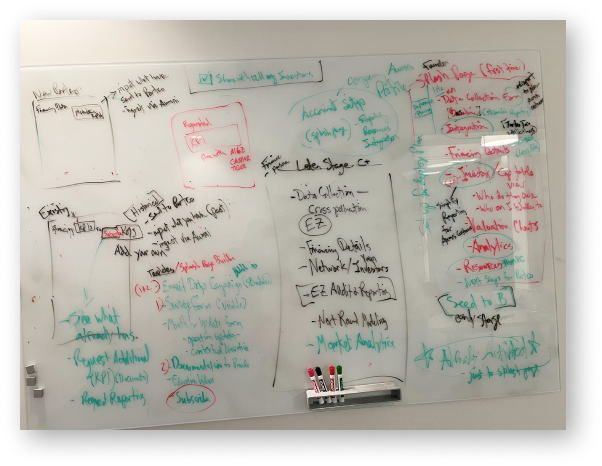
Workshops with leadership, sales and product. Early sketches gave the room something concrete to react to.
04The work
Four problems that weren’t only design problems
A two-sided product, with an invisible ops layer behind it
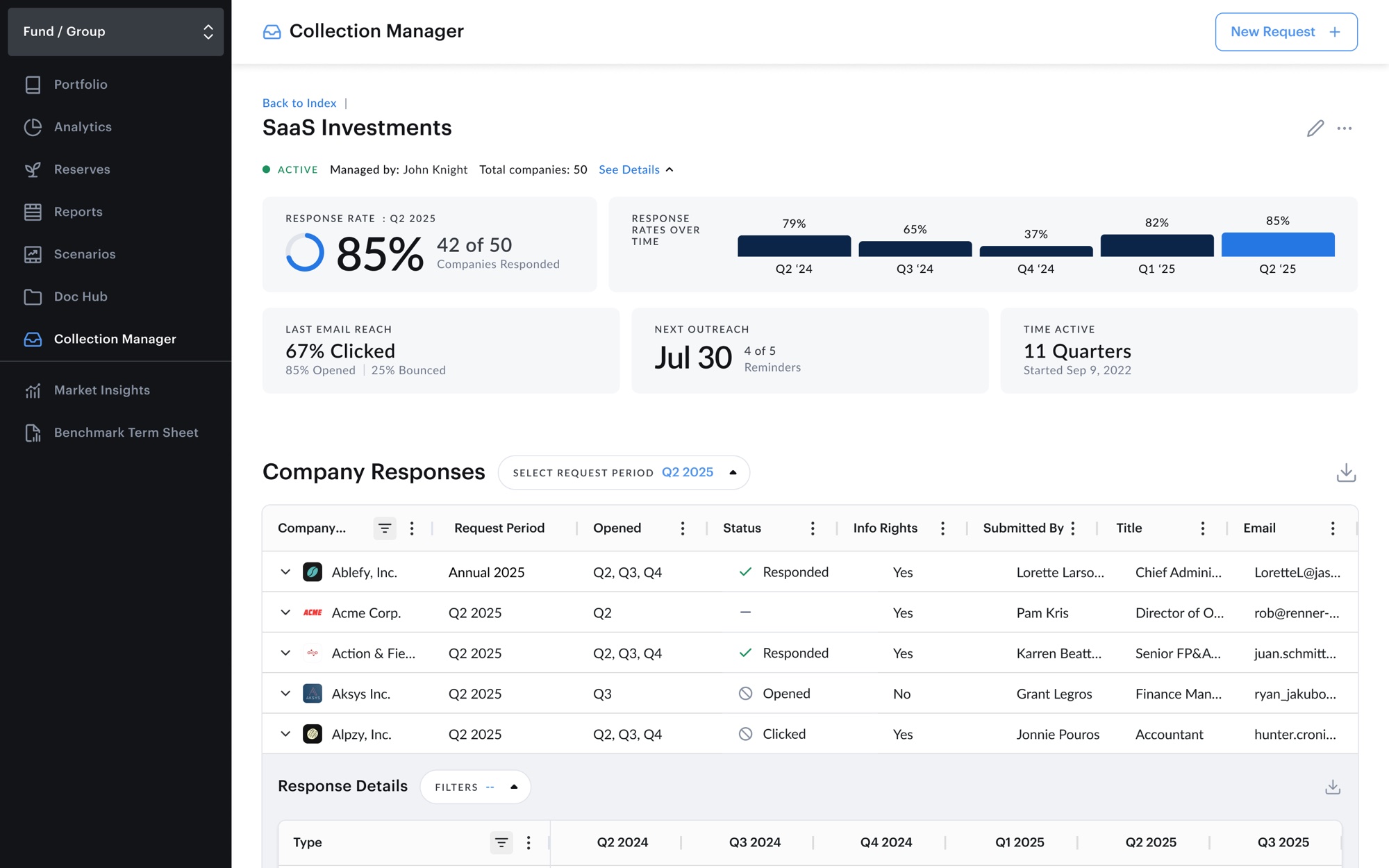
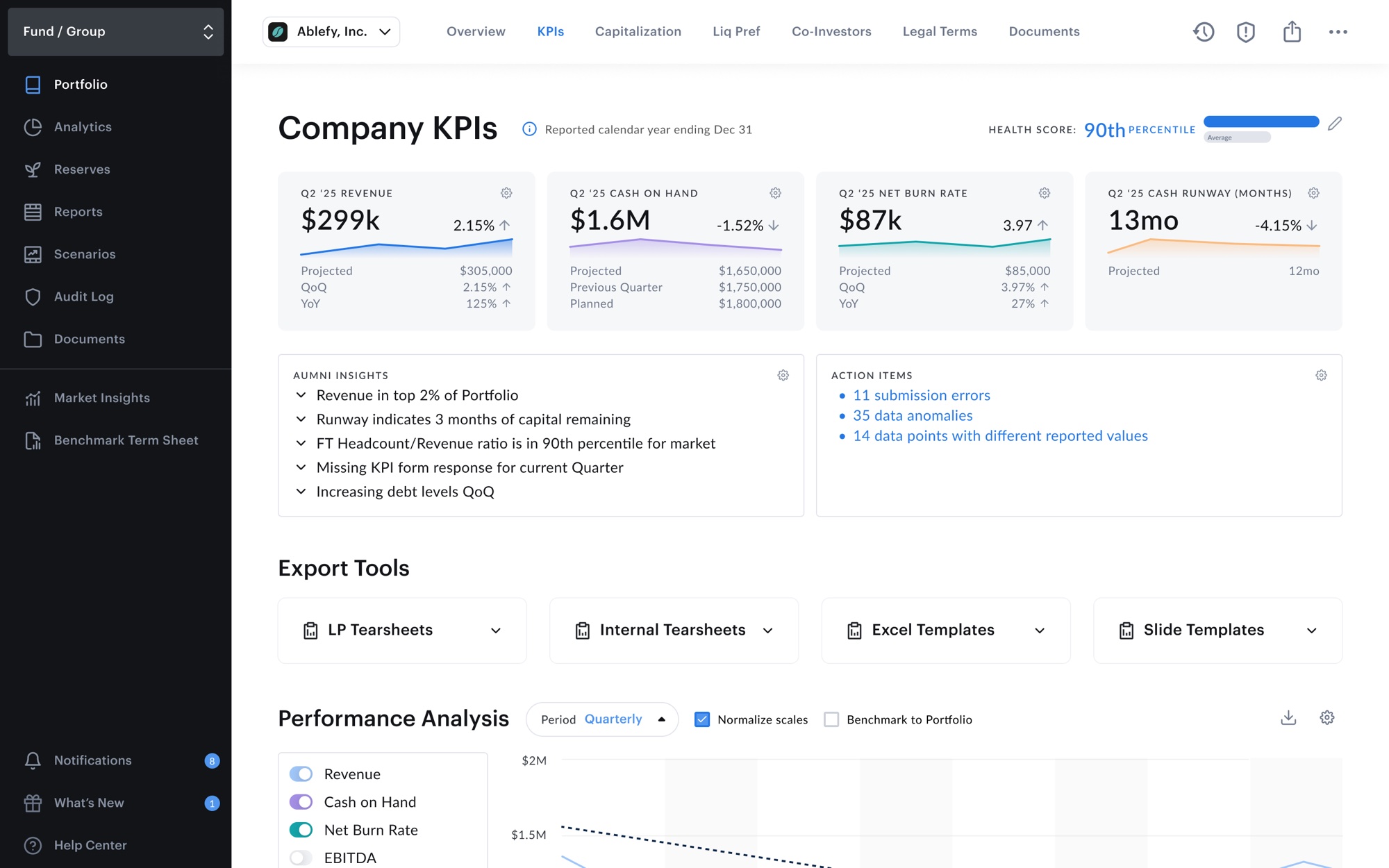
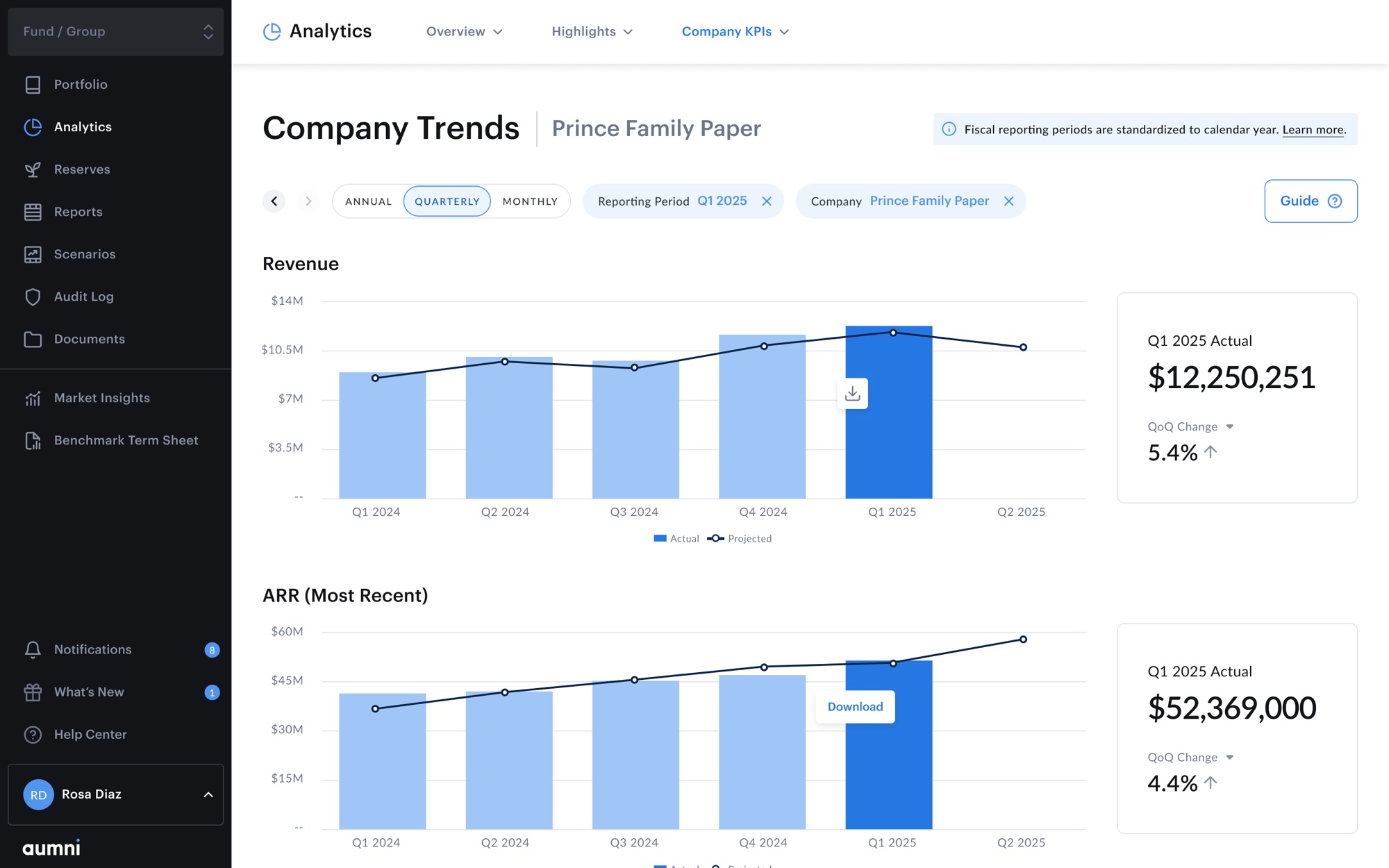
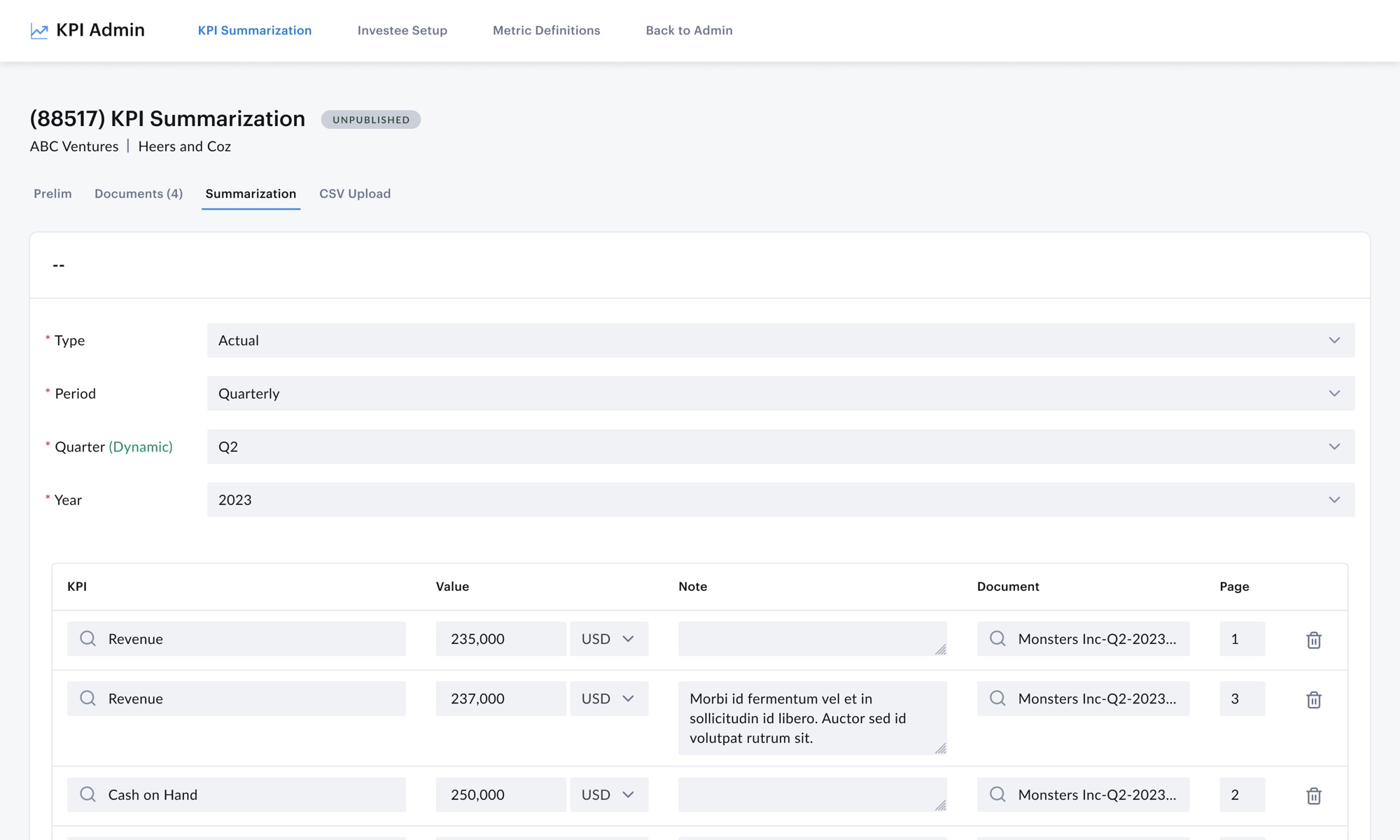
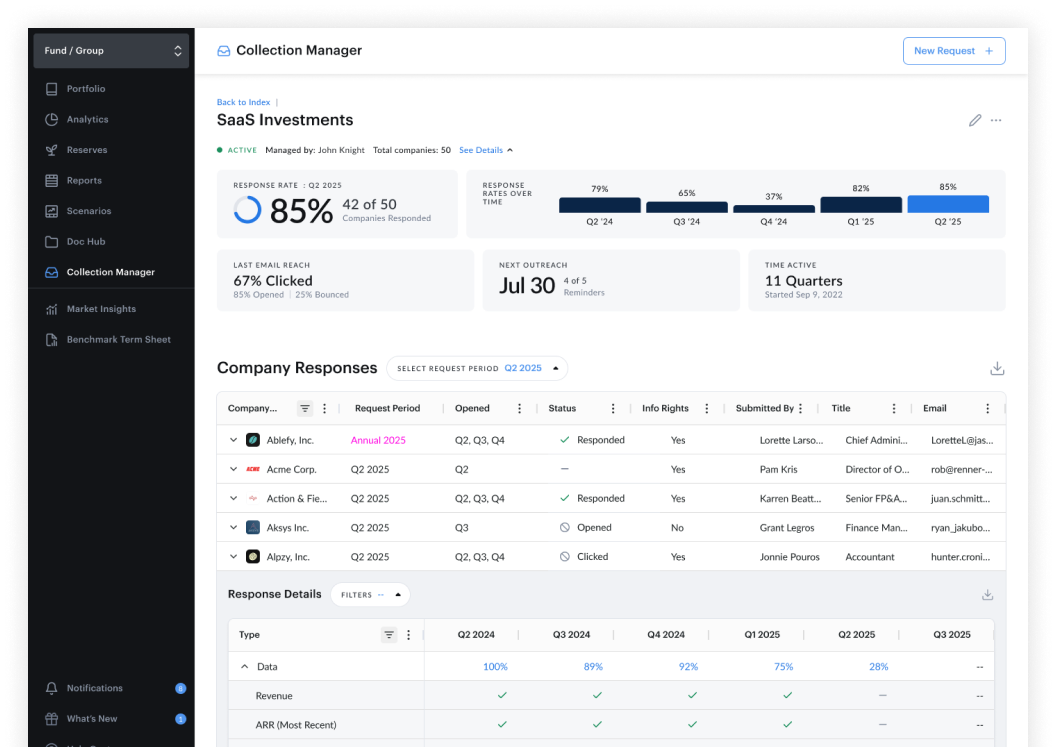
Every investor-facing surface had an invisible operations layer behind it. I designed both: the investor building data collection campaigns and reading portfolio metrics, and the internal operations team manually ingesting data from founders’ documents.
When engineering migrated platforms mid-build, I rebuilt the ops tooling from scratch without losing progress on the customer-facing product.
My callTreated the internal team as customers too. If ingestion was slow or error-prone, investors would see bad numbers, however good the dashboard looked.
Getting to yes
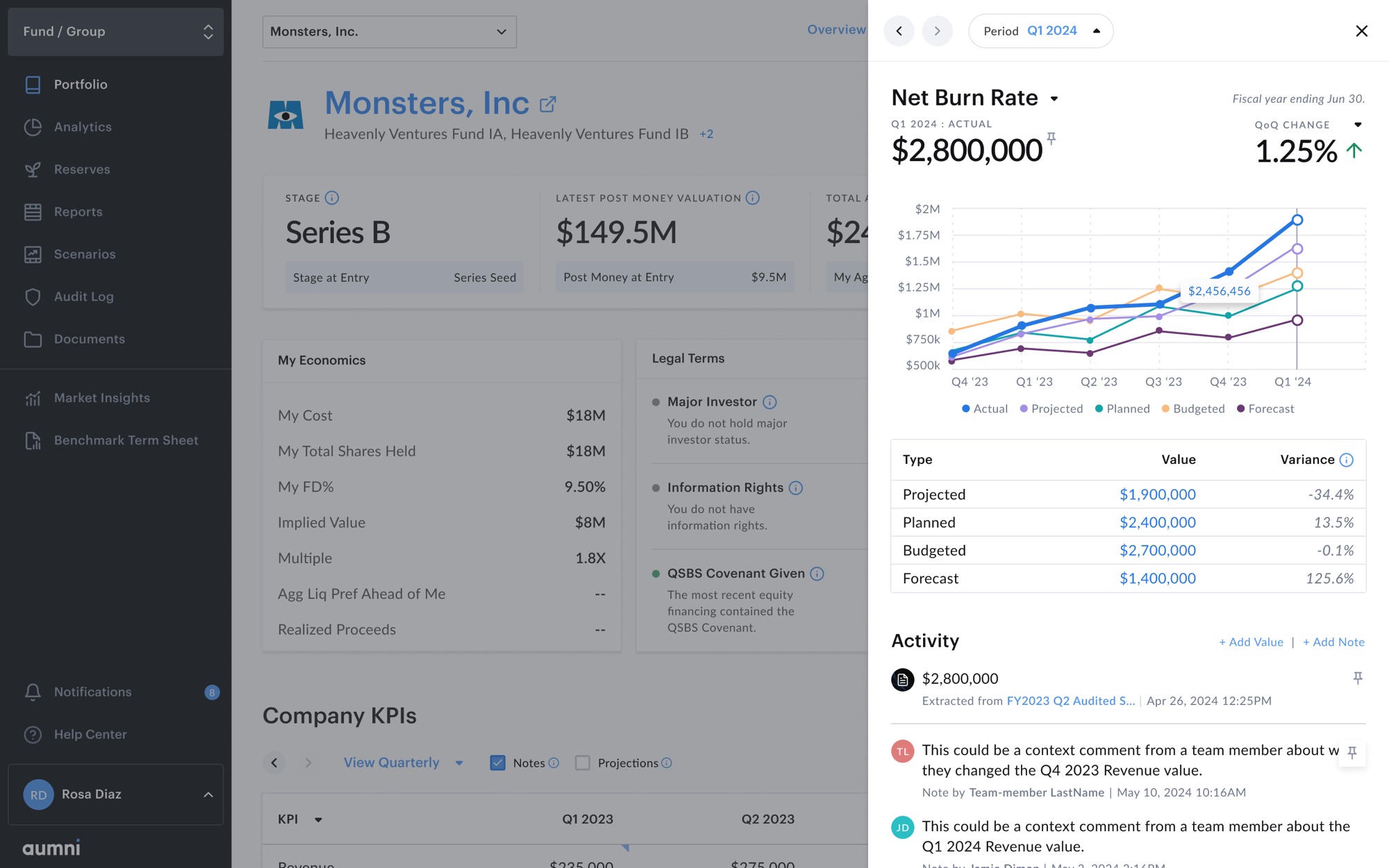
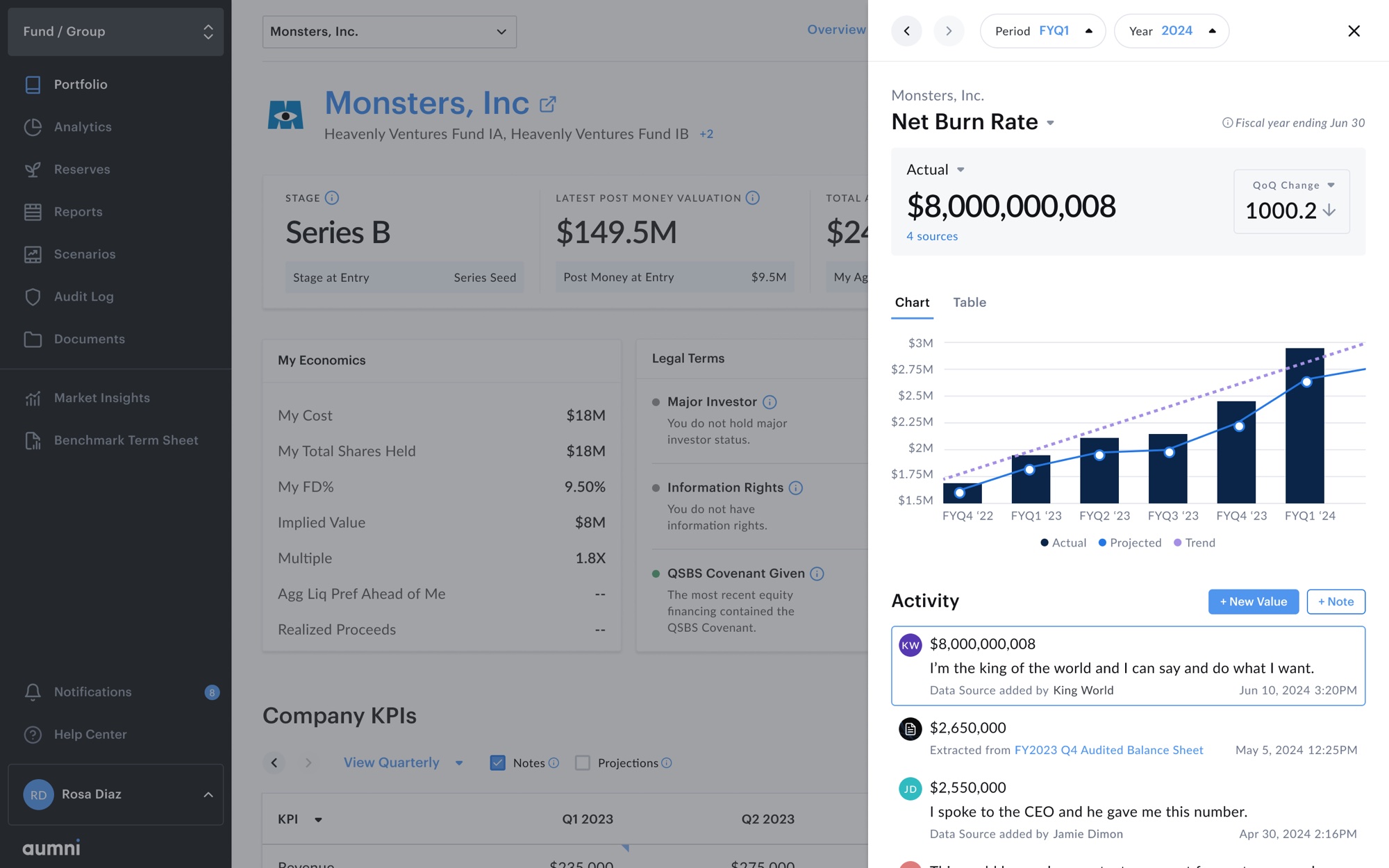
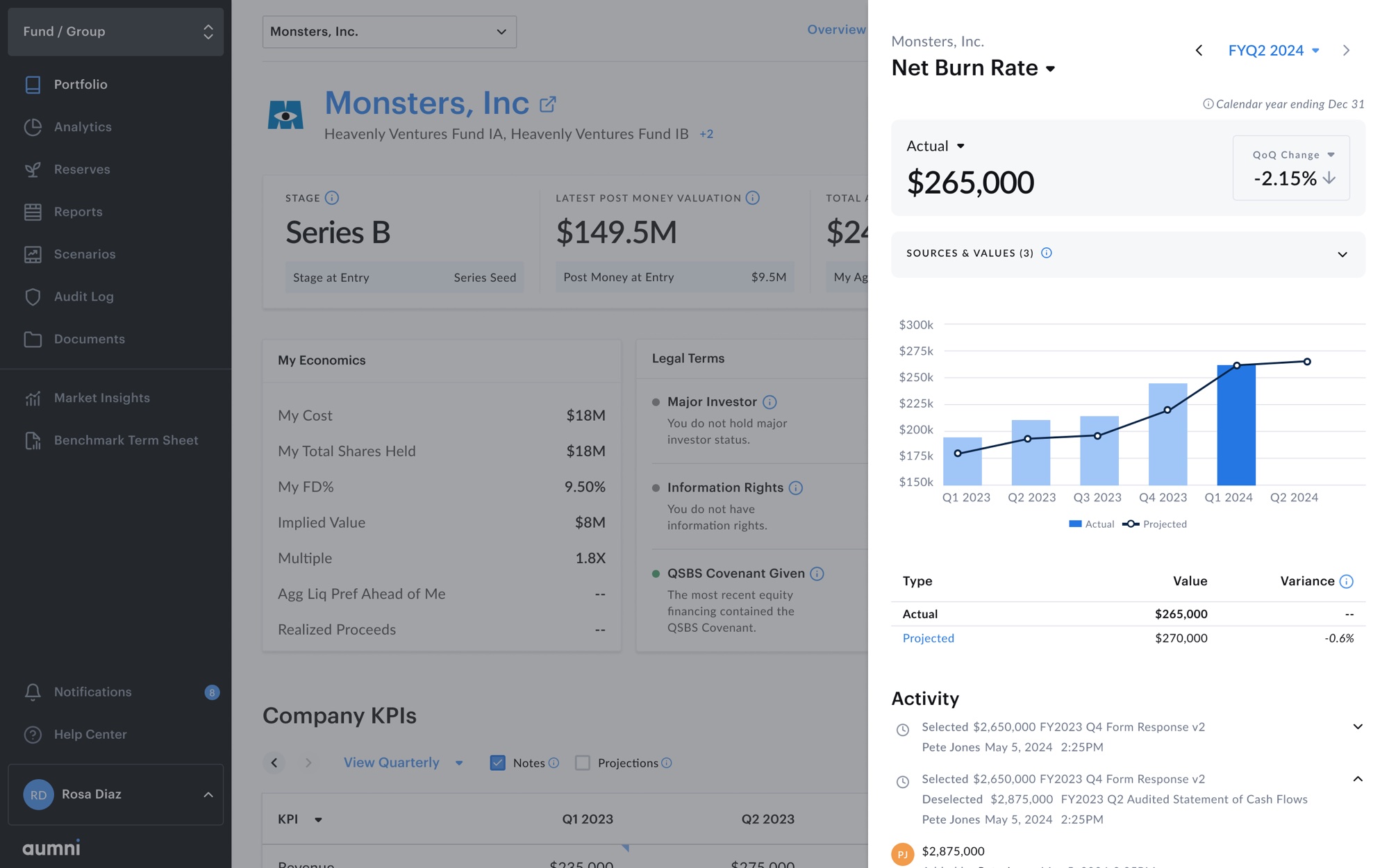
The KPI dashboard had to reconcile several reported versions of the same metric: different investors, different reporting periods, different levels of precision. Leadership stalled on committing to an approach for months.
I developed and tested three reconciliation models with real customers, documented the tradeoffs and presented a clear recommendation. We shipped the third: a separate section for managing values.
My callGetting a well-researched decision over the line, against organizational hesitation. It’s a pattern I’ve repeated at every company I’ve worked in.
Closing a capability gap nobody had prioritized
When I joined, I was surprised to find a financial application with almost no data visualization and very limited tables. Users couldn’t even drag a column to reorder it. We were building tiny capabilities by hand instead of using what already existed.
I raised this early and got nowhere. KPIs gave me the leverage to push harder. I sourced third-party data grid and visualization providers, made the case to engineering and leadership, and pushed for full adoption of capabilities customers had been requesting for years. We got adoption. The CTO would later make my same arguments publicly, nearly verbatim.
My callWaited for the right moment. A high-stakes launch turned a years-old request into a decision leadership could say yes to.
Scaling the work beyond me
Handed off 18 months of work to four designers in three weeks.
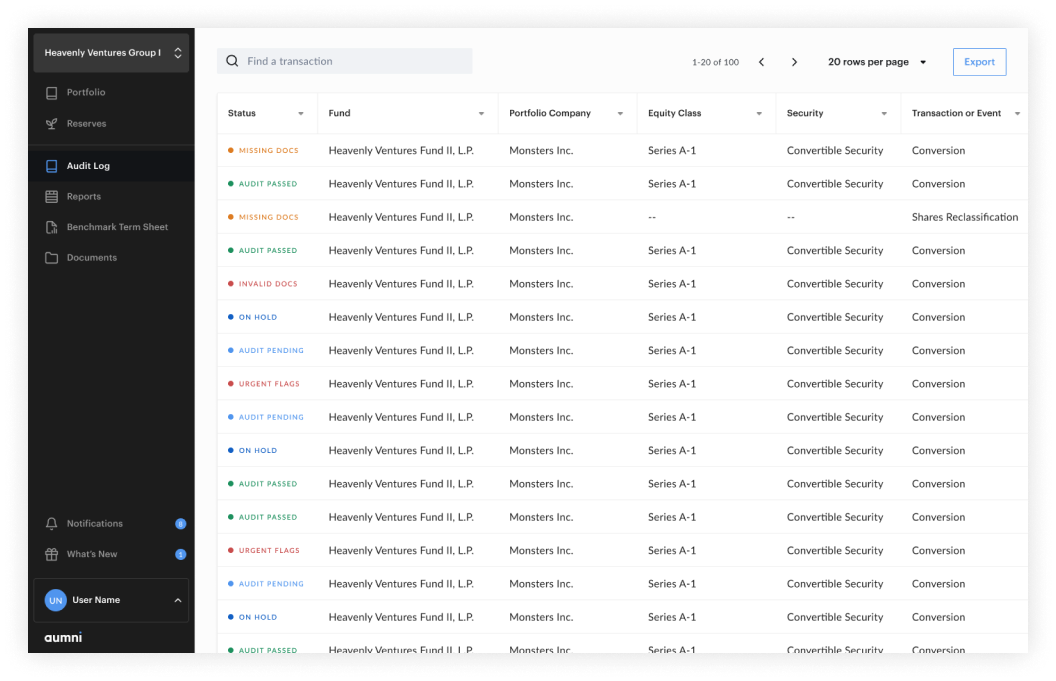
I interviewed and helped hire two offshore design teams to scale KPIs, so I could move my attention to another struggling product area, the document repository. I transitioned all existing and future KPI work (we were months ahead of engineering): every feature, every design decision and every piece of outstanding thinking across five product areas.
Little to no follow-up was needed.
My callBuilt the team that would carry the work, and wrote the thinking down well enough that it didn’t need me.
05Results
From reference library to active platform
65% of enterprise clients adopted the KPI analytics suite
150% revenue expansion driven by the KPI product
10+ designers, product managers and engineers mentored across US and international teams
3 weeks to hand 18 months of work to four designers
06Reflection
Build product by building coalition.
I had the right read on several things early: the data grid technology, the visualization gap, the overlap between documents and the audit log, and the onboarding risks. But I couldn’t get them to move fast enough.
Looking back, I was advocating in the right direction but not building the coalition I needed. Headstrong leadership doesn’t move from a single argument. It moves when it feels surrounded by evidence it can’t ignore.
I also should have pushed harder to ship. We debated solutions that real users could have answered in two weeks.
Jared is the kind of design leader who makes the whole product better, driven by his passion for advocating for his team and his customers. On our KPIs work, he took genuine ownership and quickly became a strategic thought partner to his PMs, going beyond the roadmap and the brief to deeply understand our users and push for what served them best.
What set Jared apart was that his work was always larger than himself.